 blog
Find Reliable Sewer Repair: What to Know
Table of Contents
- How to Find Reliable Sewer Repair Contractors
- Understanding Sewer Camera Inspection and Diagnostics
- Repair Methods: Trenchless Sewer Repair vs. Traditional Replacement
- Getting a Fair Sewer Line Repair Estimate
- Commercial Sewer Repair: Minimizing Downtime
- Warning Signs You Need Sewer Repair Now
- What to Expect After Repair: Warranties and Testing
- Frequently Asked Questions
Last Updated: October 18, 2026
How to Find Reliable Sewer Repair Contractors
Finding reliable sewer repair in Manhattan requires more than a quick online search. You need contractors who verify credentials, understand your problem, and charge fairly.
A reliable sewer repair contractor holds current licensing and bonding, provides transparent diagnostics before quoting, and stands behind the work with warranties. Most top-ranking pages tell you what contractors do, not how to check whether they're qualified.
Verify Licensing, Bonding, and Insurance
Start with credentials. A licensed contractor has passed exams on plumbing codes, safety standards, and installation methods. Bonding protects you if the contractor fails to complete the job or violates the contract; insurance covers property damage during work.
Ask for these three documents before scheduling service:
- Current plumbing license number, plus the name of the issuing authority (in most jurisdictions this is the state or local plumbing board)
- Proof of bonding, including the bond amount and the surety company
- General liability and workers' compensation insurance certificates, with policy numbers and expiration dates
Don't accept verbal assurances. Request copies you can verify independently. A contractor who hesitates or claims they "don't need" bonding is cutting corners.
Here's how to verify each document:
- License. Use the online lookup for the licensing authority named on the certificate. Confirm the license is active, the name matches the business entity on the estimate, and the classification covers sewer work (some cover only water supply or drain cleaning).
- Insurance. Call the number on the certificate of insurance, not the one the contractor gives you. Ask the insurer to confirm the policy is current and the limits match the certificate. For large jobs, request to be added as an additional insured.
- Bond. Ask the surety company to confirm the bond is active and its amount. Small bonds often cover only permit compliance, not defective workmanship, so ask what it actually covers.
Check References and Local Reputation
Call at least two recent customers and ask specific questions: Did the contractor show up on time? Was the work completed as promised?
Ask each reference three things the review sites won't tell you:
- What was the original diagnosis, and did the final bill match the estimate?
- Did the contractor pull the required permit, and did an inspector sign off on the work?
- Has the same problem recurred, and if so, did the contractor honor the warranty without argument?
Check online reviews for patterns, not individual complaints. A contractor with 47 five-star reviews and one angry post differs from one with mixed feedback about recurring problems.
Also check for complaints filed with the state consumer protection office or licensing board. A pattern of unresolved complaints outweighs a single bad review.
Questions to Ask Before You Sign
Ask every contractor the same questions and compare answers:
- Will you provide a written camera inspection report with still images and footage before quoting the repair?
- Who pulls the permit, and is the permit fee included in the estimate?
- What is the warranty on labor and on materials, and is it transferable if I sell the property?
A contractor who answers clearly and in writing is worth hiring. One who deflects or gives vague answers is telling you something important before work begins.
Understanding Sewer Camera Inspection and Diagnostics
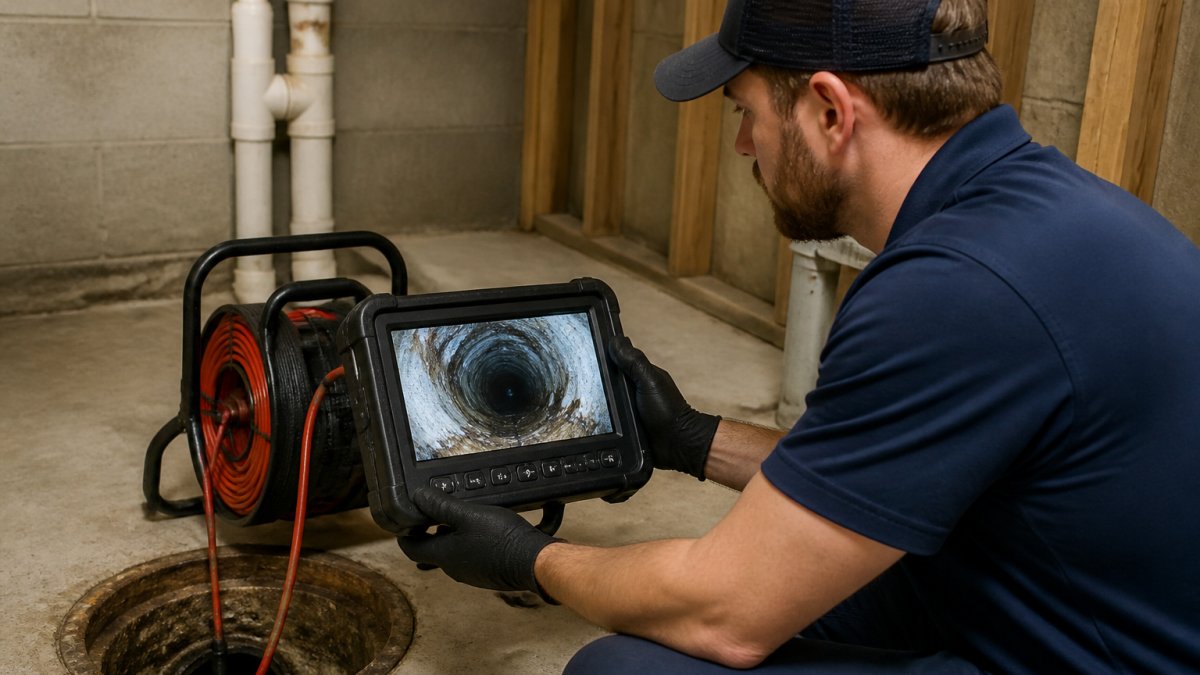
A sewer camera inspection uses a waterproof video probe to show exactly what's happening inside your pipe. It's the difference between "you probably need a replacement" and seeing the actual damage on screen.
What Video Inspection Reveals
The camera captures blockages, cracks, root intrusion, collapsed sections, and buildup. The recording shows exactly where problems are and how severe, protecting you from guesswork and documenting findings for insurance claims or real estate transactions.
A complete report includes still images from problem areas, measurements of damage depth and length, and notes explaining findings. The contractor should walk you through the footage and explain what each finding means for your situation.
How Inspection Results Guide Repair Decisions
The inspection determines which repair method makes sense. Minor cracks might be addressed with pipe lining; severe collapse or multiple problem areas typically require replacement. Roots cleared by hydro jetting need different treatment than roots that have fractured the pipe.
Without this diagnostic step, contractors recommend repairs on incomplete information, which is why different companies give different recommendations. The inspection eliminates that uncertainty.
Repair Methods: Trenchless Sewer Repair vs. Traditional Replacement
Two main approaches exist: trenchless repair (pipe lining, hydro jetting) and traditional excavation and replacement. The wrong choice wastes money or leaves the problem half-solved.
When Pipe Lining Works Best
Pipe lining, also called CIPP (cured-in-place pipe), works for cracks, small holes, and minor structural damage. A resin-coated flexible tube is inserted into the damaged pipe and hardens, creating a new pipe inside the old one.
Pipe lining is not appropriate for collapsed pipes, severely corroded sections, or lines with multiple major breaks. If the pipe is already crushed or has lost structural integrity, lining won't solve the problem, you'll need replacement.
When Full Sewer Line Replacement Is Necessary
Replacement becomes necessary when the pipe is severely damaged, partially collapsed, failed in multiple locations, or when very old pipes (80+ years) are deteriorating throughout the line, not just at one spot.
Replacement involves excavating the old pipe and installing new sections. It's more disruptive and expensive than lining, but it's the permanent fix when damage is extensive, giving you a new pipe with a 50-year lifespan rather than a patched aging line.
Getting a Fair Sewer Line Repair Estimate
A complete estimate tells you what work is needed, how it will be done, and what it costs. Vague estimates are a warning sign. Detailed estimates protect both you and the contractor.
What a Complete Estimate Should Include
A solid estimate names the repair method (lining, replacement, hydro jetting), identifies the location and length of the problem area, lists materials and labor, and provides a total price with payment terms.
Ask whether the estimate includes cleanup, debris removal, and restoration of your yard or driveway. Some contractors quote repair only, then charge extra for restoration.
A complete estimate should be itemized into at least these lines:
- Diagnostics: camera inspection and locating fee
- Permits: municipal sewer permit and inspection fees, if required
- Labor: crew size, hours, and rate
If any of those lines are missing, ask why. A quote that lumps everything into one number is harder to compare and easier to inflate later.
Local Cost Factors and Realistic Pricing
Sewer repair costs vary by pipe material, depth, accessibility, and whether excavation is needed. Clay and cast iron pipes are more common in older properties and often require more extensive work than PVC.
Here is how each factor typically moves the bill, so you can sanity-check a quote before you sign:
- Pipe material. Clay and cast iron are heavier, more brittle, and often require more careful excavation and more fittings than PVC. Expect material and labor to run higher on older lines, and expect a higher chance that the inspection reveals multiple problem areas rather than one.
- Depth. Every additional foot of depth adds excavation, shoring, and dewatering time. A line at 8 feet is not just twice the digging of a line at 4 feet, it also needs safe trenching and often a larger crew.
- Access. A line under open yard is the cheapest to reach. A line under a driveway, sidewalk, or finished basement floor adds saw-cutting, concrete removal, and restoration. A line under a building may require interior access and temporary floor removal.
Get multiple estimates. If one quote is significantly lower, ask why: cheaper materials, skipped diagnostics, or an overlooked part of the problem? If one is significantly higher, ask what additional work it includes. Comparable estimates from licensed contractors should fall within a reasonable range.
Finally, ask what happens if the inspection reveals more damage than the estimate assumed. A fair contractor explains the change-order process in advance, in writing, so you are never surprised by a mid-job price increase.
Commercial Sewer Repair: Minimizing Downtime
Commercial properties face different pressures: a restaurant can't close for a week, and a retail store loses customers during construction. Commercial sewer repair requires coordination and speed.
Emergency Response for Restaurants and Retail
A backed-up sewer line in a commercial kitchen is an emergency. You need a contractor who answers 24/7 and prioritizes your location. Jersey Shore Sewer & Drain Cleaning provides same-day appointments and emergency response.
The contractor should assess the problem quickly, explain your options, and execute the fastest safe solution. For many commercial backups, hydro jetting clears the blockage in hours.
Scheduling and Coordination
Coordinate timing with your contractor. Some repairs can happen after hours or on Sundays when the business is closed; others require daytime access. A professional contractor will work with your schedule and keep disruption minimal.
Confirm in advance whether the contractor needs water shut off, electrical access, or parking space for equipment. Clarify how long the work typically takes and what you should expect during the process. Communication prevents surprises.
Warning Signs You Need Sewer Repair Now
Slow drains throughout your home, sewage backups in basements or lowest fixtures, persistent odors near clean-outs, soggy patches in your yard, or unusually lush grass over the sewer line all indicate problems.
If you're selling your home, a sewer inspection certificate is often required by the buyer's lender. Get the inspection done early in the process so you have time to address any issues before closing.
What to Expect After Repair: Warranties and Testing
A reputable contractor tests the repaired line to confirm it works. For lining work, they'll run water through and verify no leaks occur.
Get a copy of the final inspection report and any testing documentation. This protects you if problems recur and proves the work was done properly.
When your sewer line fails, you need a contractor who diagnoses accurately, explains your options clearly, and charges fairly for quality work.
Frequently Asked Questions
How do I verify a sewer repair contractor's license and insurance?
Ask the contractor for their license number and verify it with your state plumbing board before hiring. Request proof of general liability and workers' compensation insurance. A reliable contractor will provide these documents without hesitation. Licensed contractors have passed exams, follow building codes, and carry bonding to protect you if work is faulty or incomplete. Never hire anyone who refuses to provide these credentials.
What should a sewer camera inspection actually show me?
A video inspection reveals the exact condition of your sewer line: cracks, breaks, tree root intrusion, corrosion, and blockages. The contractor should provide you with a recorded video or still images showing the problem area, not just a verbal summary. This evidence lets you understand what repair method is truly necessary and prevents unnecessary upselling. Insist on seeing the footage yourself before agreeing to any repair work.
Is trenchless sewer repair safe for old pipes, and will it actually last?
Trenchless sewer repair using pipe lining (CIPP) is safe for pipes 50+ years old if the line is structurally sound enough. The process doesn't damage existing pipes. However, if your line has major breaks or collapses, full replacement may be necessary. Pipe lining typically lasts 25-40 years. A video inspection determines whether your specific pipes are candidates for relining or require replacement.
What cost factors affect sewer line repair estimates in my area?
Pricing depends on the length of the damaged section, repair method chosen (lining vs. replacement), soil conditions, depth of the line, permits required, and whether the line crosses property boundaries. Trenchless repair costs less than excavation but may not be possible for all damage types. Get multiple estimates and compare what each includes: inspection, permits, testing, and cleanup. Request an itemized bid so you understand where costs come from.