 how-to
Signs of Root Intrusion in Pipes: 7 Warning Signs
Table of Contents
- 7 Warning Signs of Root Intrusion in Pipes
- How Tree Roots Find Their Way Into Sewer Lines
- How to Confirm Root Intrusion: Visual Identification Guide
- Sewer Line Video Inspection Cost: What to Expect
- Hydro Jetting for Root Removal: How It Works
- Cost of Removing Tree Roots From Pipes: DIY vs Professional
- Prevention, Insurance, and When to Call a Professional
- Frequently Asked Questions
Last Updated: September 14, 2026
7 Warning Signs of Root Intrusion in Pipes
Root intrusion in pipes is the process by which tree and shrub roots enter a sewer line through cracks, loose joints, or aging pipe walls, then expand inside the pipe until they restrict or block wastewater flow. At Jersey Shore Sewer & Drain Cleaning, we have been addressing root-blocked laterals since 1990. The seven warning signs below often escalate in a predictable order, and catching them early can prevent more extensive issues.
The first four signs are the ones homeowners describe when they call us. The last three are what a sewer camera finds when nobody called in time.
1. Slow Drains That Keep Coming Back
A single slow drain is usually soap scum or hair (Document Display (PURL) | NSCEP). The same drain slowing down two or three times in a year is a different problem. When a mechanical auger clears the clog and it returns within weeks, the blockage is often regrowing from the pipe wall rather than accumulating from fixtures. That regrowth pattern is one of the earliest signs of root intrusion in pipes.
2. Gurgling Sounds and Unpleasant Odors
Gurgling from a toilet, tub, or basement floor drain means air is being pulled through water that should seal it (Hydrogen Sulfide | Medical Management Guidelines | Toxic Substance Portal). Roots create a partial blockage, the wastewater behind it traps gas, and that gas finds the nearest escape route: your fixtures. If the gurgling comes with a musty or sewage smell that lingers after cleaning, the problem is in the line, not the room.
3. Lush Grass Patches and Soggy Spots
A strip of unusually green, fast-growing grass directly above a sewer lateral is a classic tell (the EPA). Roots crack the pipe, wastewater leaks into the soil, and that patch gets free fertilizer year-round. In winter, look for a patch that stays green after frost or snowmelt that never quite drains. Soggy spots, sunken soil, and moisture accumulation near the foundation point to the same cause.
4. Sewage Backup and Recurring Clogs
Sewage backup is the point where a partial blockage becomes a full one. Wastewater has nowhere to go but back up through the lowest drain in the building, often a basement floor drain or a ground-floor tub. Recurring clogs in the same fixture, especially after heavy rain, suggest roots have narrowed the pipe enough that normal flow can no longer push past them.
5. Water Pressure Changes and Structural Damage
Pressure that drops at every fixture at once points to the main sewer line, not a single branch. Roots pressing against pipe walls also shift the soil around the line, which can crack a foundation slab, buckle a driveway, or settle a patio. Left long enough, root growth causes structural damage that costs far more than the drain repair itself.
How Tree Roots Find Their Way Into Sewer Lines
Tree roots seek out sewer lines because a sewer lateral delivers three things roots need constantly: water, oxygen, and nutrients. Condensation on the outside of a cool pipe, plus the warm moist air escaping through loose joints, makes the line a target long before any crack appears.
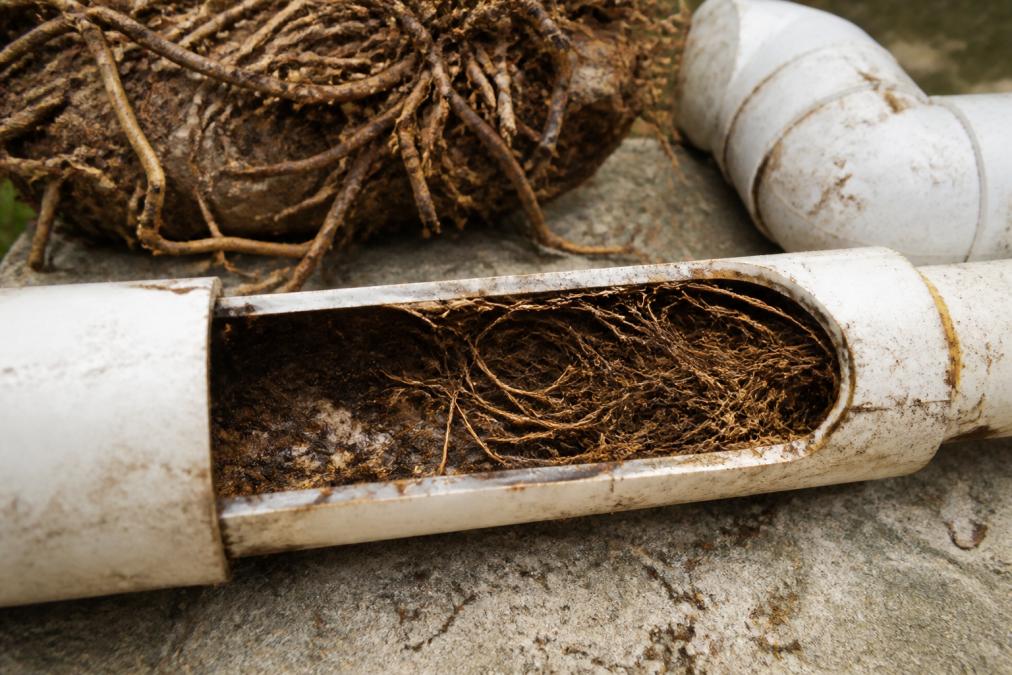
Clay pipes and concrete pipes, common in older neighborhoods, are the most vulnerable. They were laid in short sections with joints that shift as soil settles, and those joints are the entry point. Cast iron fails differently: it corrodes from the inside until the wall thins, then cracks. Once a root tip enters, it branches into a dense mat that traps grease, paper, and waste, turning a pinhole opening into a full pipe blockage.
How to Confirm Root Intrusion: Visual Identification Guide
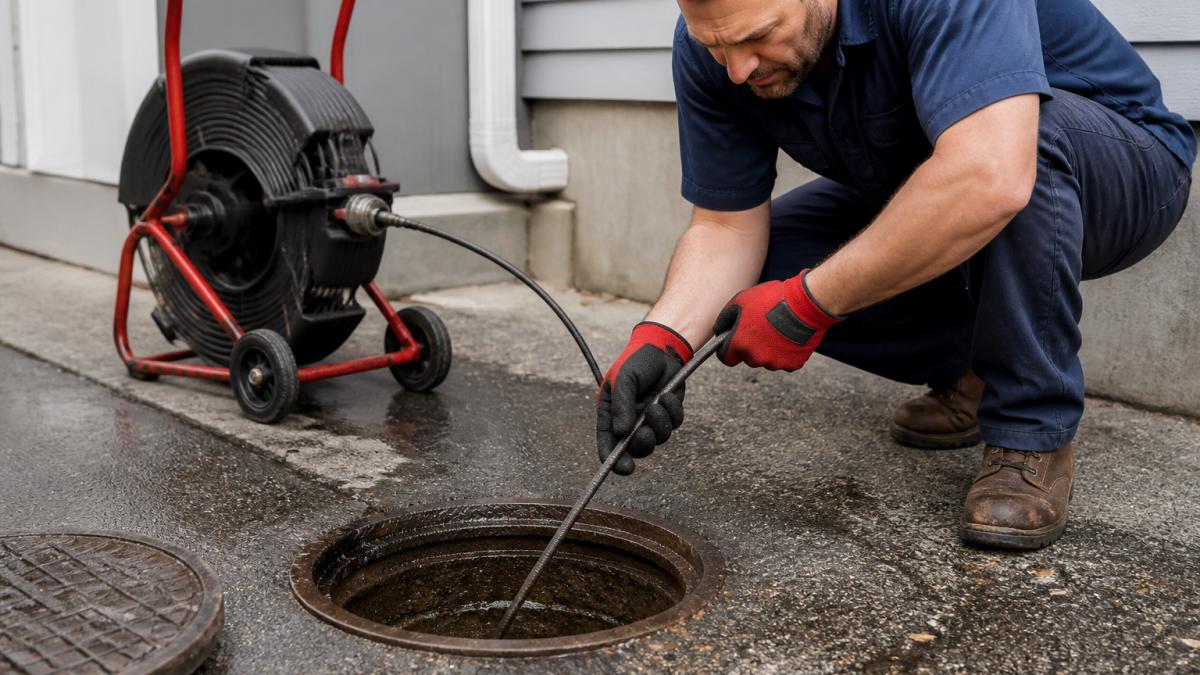
Confirmation requires looking inside the pipe, not guessing from symptoms. A sewer camera inspection is the only reliable way to see roots, measure how much of the pipe they occupy, and identify the exact location and depth of the intrusion.
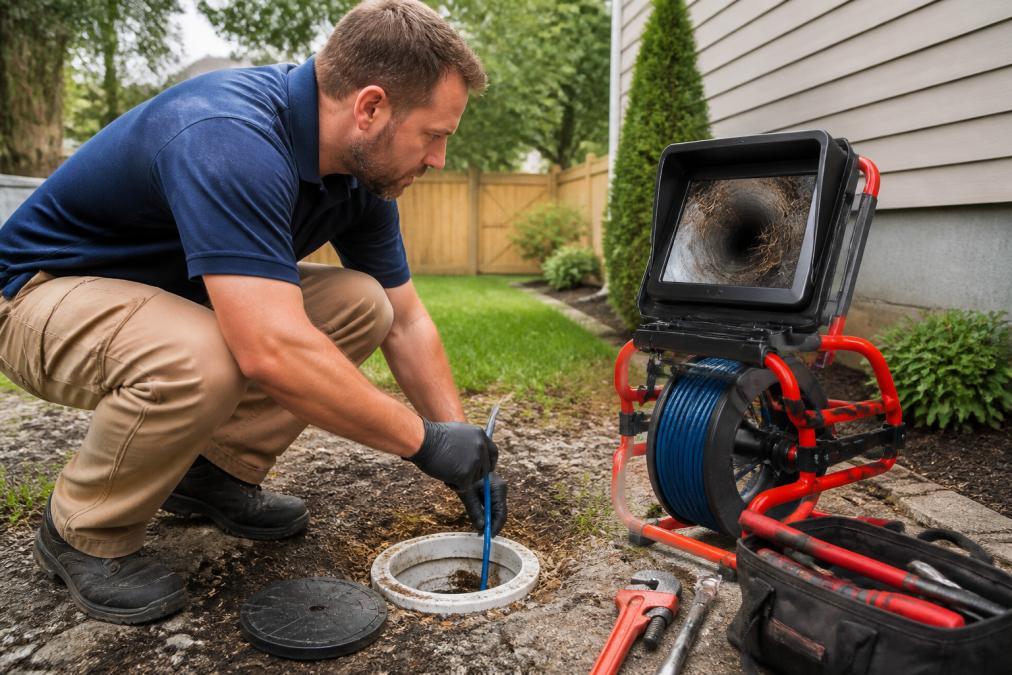
Here is what the camera typically reveals, in order of severity:
- Hair-like root tips at a joint. Early stage, minimal flow restriction.
- Root masses filling part of the pipe. Noticeable slow drains.
- Full pipe blockage with root matting. Backup risk is immediate.
- Offset or collapsed pipe where roots have widened a crack. Repair, not just cleaning, is required.
A camera inspection also produces a recorded report with footage and pipe depth readings. Home sellers and buyers often need that documentation for lenders and pre-listing plumbing certification, which is one reason we run inspections before any cleaning work rather than after.
Sewer Line Video Inspection Cost: What to Expect
A sewer line video inspection is the single most useful diagnostic step in the entire root-intrusion process, and it is also the cheapest. The final number for residential inspections is driven by four variables rather than a flat rate.
What drives the price:
- Line length and run. A short lateral from the house to the city main is faster to inspect than a long rural run with multiple cleanouts.
- Access difficulty. A cleanout at grade is quick. A line that has to be accessed through a roof vent, a toilet pull, or an excavated pit adds labor.
- Bundling.
- Report format. A verbal summary is cheaper than recorded footage with depth markers and timestamps. If you are buying or selling a home, you want the recorded version.
What you should receive for the money:
- Recorded video of the full run, not just the problem area
- Depth readings and distance-to-defect markers
- A written summary identifying root location, pipe material, and condition
- A clear recommendation: clean, repair, or replace
The decision framework most homeowners never get:
| What the camera shows | Right next step | Wrong next step |
|---|---|---|
| Hair-like root tips at one joint | Hydro jetting, then re-inspect | Chemical root killer alone |
| Root mass filling part of the pipe | Jetting plus camera verification | Repeated augering |
| Full blockage with root matting | Emergency jetting, then assessment | Pouring drain cleaner |
| Cracked, offset, or collapsed pipe | Cleaning plus repair or replacement | Jetting and hoping |
That last row is where money gets wasted. Jetting a collapsed pipe clears it for a few weeks and then the same call comes back. The camera is what tells you which row you are in.
If a provider will not show you the footage or put findings in writing, that is the signal to call someone else. The inspection is not the expense to minimize, it is the expense that prevents the bigger one.
Hydro Jetting for Root Removal: How It Works
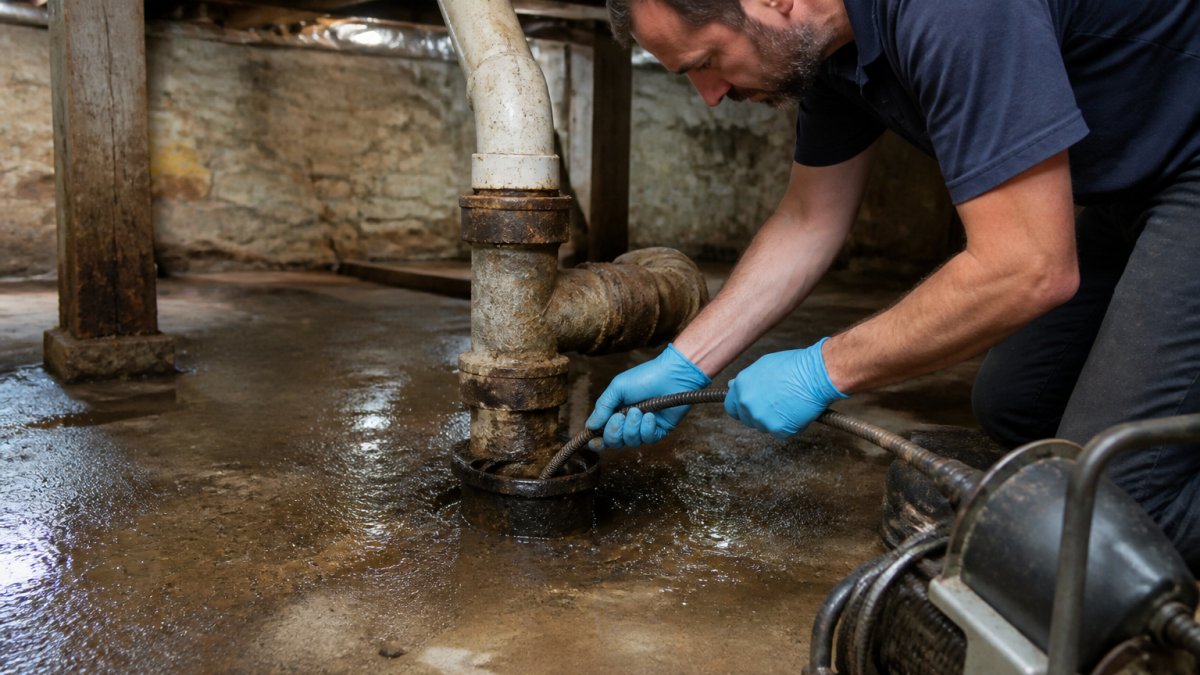
Hydro jetting for root removal uses high-pressure water, typically delivered through a rotating nozzle, to scour roots, grease, and scale off the pipe wall and flush them out of the line. Unlike a mechanical auger, which punches a hole through the blockage and leaves roots attached to the wall, hydro jetting cleans the full circumference of the pipe.
That difference is why recurring clogs stop recurring after jetting. The auger clears a channel; the jetter clears the pipe. For older clay pipes, pressure is adjusted to the pipe's condition, which is why the camera inspection comes first. Blasting a deteriorated line at full pressure can finish what the roots started.
Cost of Removing Tree Roots From Pipes: DIY vs Professional
The cost of removing tree roots from pipes depends on severity, pipe material, access, and whether the line needs repair after cleaning. We provide free quotes after inspection.
| Situation | Typical Approach | What Determines Cost |
|---|---|---|
| Early root tips at one joint | Camera inspection plus hydro jetting | Line length, access point |
| Recurring clogs, partial blockage | Jetting plus camera verification | Pipe material, blockage density |
| Full blockage or backup | Emergency jetting, then assessment | After-hours timing, depth |
| Cracked, offset, or collapsed pipe | Cleaning plus repair or replacement | Excavation, pipe run length |
Store-bought chemical root killers and drain cleaners treat symptoms. They can kill root tips near the opening but do not remove the root mass, and repeated use damages older pipe. A mechanical auger you rent clears a channel that roots regrow into within a season. Professional hydro jetting removes the growth and the camera confirms it is gone.
For property managers and restaurants, the cost comparison is not just the service call. It is downtime. A line that backs up during service hours costs far more than the jetting that would have prevented it.
Prevention, Insurance, and When to Call a Professional
Prevention starts with knowing what you have underground. If you own an older property with clay or cast iron laterals, schedule a camera inspection before symptoms appear, a clean line on camera is a baseline you can compare against for years. Plant new trees and shrubs at a distance from the sewer lateral, and be cautious with fast-growing species, whose roots travel furthest in search of water.
Tree species risk, by root behavior:
- High risk near a lateral: willows, poplars, cottonwoods, silver maples, and elms. These are water-seeking species with aggressive, far-traveling roots.
- Moderate risk: oaks, sweetgums, and most maples. Roots spread widely but are less likely to force into small openings.
- Lower risk: slow-growing ornamentals, most evergreens, and columnar varieties with compact root balls.
Species is only half the equation. A high-risk tree planted 30 feet from the lateral is a smaller threat than a moderate-risk tree planted 3 feet from a cracked clay joint. Distance and pipe condition matter more than the label on the tree.
Insurance and liability, the part most articles skip:
Many homeowner policies cover sudden damage from a sewer backup but exclude the root intrusion itself and the pipe repair, treating it as a maintenance issue. Coverage varies by policy and by state, so read your declarations page or ask your agent directly whether root intrusion and sewer line repair are covered. Two questions to ask in writing:
- Does my policy cover the cost to access and repair the lateral, or only the water damage inside the home?
- Is there a separate sewer line endorsement or service line coverage I can add?
If you are selling, a documented inspection protects you from a buyer's claim that you knew about a problem. If you are buying, ask for the seller's most recent camera report, a clean line on record is worth more than a verbal assurance.
Call a professional when you see any of these:
- Backup at more than one fixture
- Sewage odor inside the building
- Soggy ground or a sunken patch over the lateral
- Recurring clogs after two clearings
- A camera report showing cracks, offsets, or root masses
Jersey Shore Sewer & Drain Cleaning has handled residential, commercial, and industrial sewer and drain work since 1990, and we are licensed, bonded, and insured. We use video inspections and high-pressure hydro jetting to find the real problem before recommending work, and we offer free quotes. If you are not sure whether we reach your area, call and ask before you book.
Frequently Asked Questions
Does homeowners insurance cover roots intruding in sewer lines?
Most standard homeowners insurance policies do not cover root intrusion because it is considered a maintenance issue. However, if the roots cause a sudden sewage backup that damages your home's interior, that damage may be covered. Review your policy carefully or ask your insurer whether sewer line coverage or a service line endorsement is available, since coverage varies widely by state and provider.
How do plumbers fix tree roots in pipes?
Plumbers typically start with a sewer camera inspection to locate the intrusion. From there, they may use a mechanical auger to cut through roots, hydro jetting to flush out debris, or chemical root killers to slow regrowth. For severe damage, a trenchless repair or full pipe replacement may be needed. The right method depends on pipe material, root severity, and pipe integrity.
How much does it cost to fix root intrusion?
The cost of removing tree roots from pipes depends on the severity, pipe material, and method used. Simple augering costs less than hydro jetting or trenchless repair. Because pricing varies by job, request a free quote from a licensed plumber who can inspect first.
How do you tell if you have roots in your pipes?
Look for slow drains that keep returning, gurgling sounds, unpleasant odors, lush grass patches over the sewer line, and recurring clogs. A sewer camera inspection is the only way to confirm root intrusion visually. If you notice several of these signs at once, call a professional for a video inspection before the problem worsens.
Root intrusion never fixes itself, and the signs rarely stay mild for long. If you are seeing slow drains, gurgling, or a suspiciously green patch in the yard, the line is telling you something. Jersey Shore Sewer & Drain Cleaning provides 24/7 emergency service, same-day appointments, and camera inspections that show you exactly what is happening inside the pipe before any work begins. Get a free quote and a straight answer on what your sewer line actually needs. Call the plumber now.