 listicle
Hydro Jetting Benefits for Restaurants: A Complete Guide
Table of Contents
- How Hydro Jetting Works and Why Restaurants Need It
- Hydro Jetting Grease Buildup: The Core Restaurant Problem
- Clearing Commercial Kitchen Drain Clogs Before They Shut You Down
- Hydro Jetting vs. Drain Snaking: Which Method Actually Works
- Restaurant Drain Maintenance Schedule: How Often Should You Service?
- Real Financial Benefits: Emergency Repair Costs You'll Avoid
- Is Hydro Jetting Safe for Your Restaurant's Pipes?
- Frequently Asked Questions
Last Updated: October 12, 2026
How Hydro Jetting Works and Why Restaurants Need It
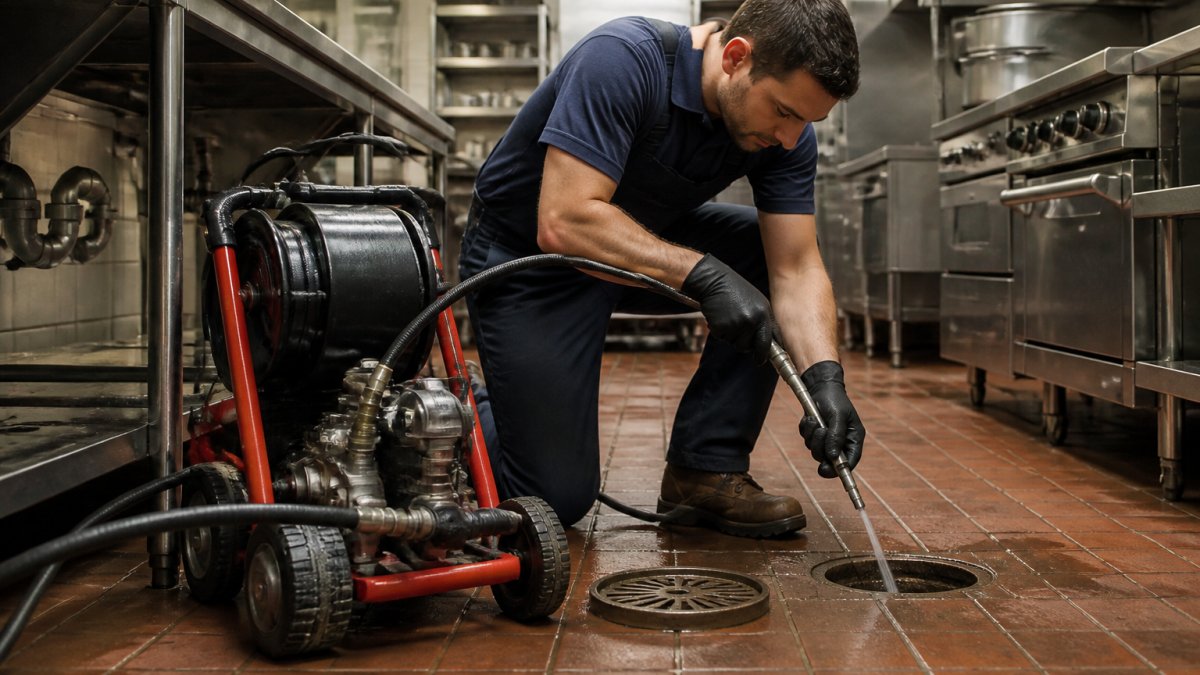
Hydro jetting benefits for restaurants include forcing water through drain lines at up to 4,000 PSI, clearing grease, sludge, food waste, and mineral deposits from the pipe interior.
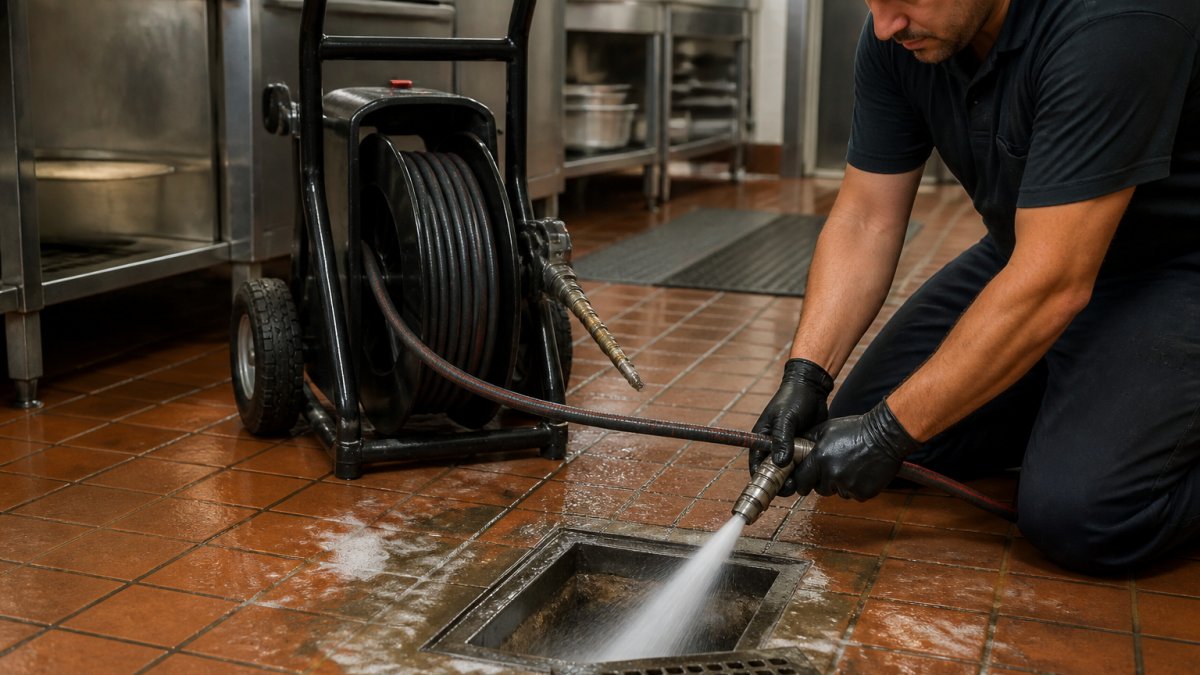
Your kitchen generates grease buildup faster than residential drains.
Hydro jetting prevents that by clearing the entire pipe interior, not just opening a passage through the clog.
The process is straightforward: a technician inserts a specialized nozzle, pressurized water jets backward through the line, and the force flushes debris out through the sewer, leaving a clean pipe ready for weeks or months of service.
Hydro Jetting Grease Buildup: The Core Restaurant Problem
Grease is your restaurant's number-one drain enemy.
Grease traps food waste, soap scum, and mineral deposits into a stubborn composite buildup that snaking and chemical treatments can't remove.
Many owners try chemical drain cleaners first. These eat away at some grease but rarely clear buildup coating the entire pipe wall, so the problem returns within weeks.
Hydro jetting grease buildup works because the high-pressure stream breaks the bond between deposits and the pipe wall, flushing grease, sludge, and debris out entirely rather than pushing it downstream.
The key advantage: hydro jetting clears the pipe interior completely, restoring full flow capacity.
Clearing Commercial Kitchen Drain Clogs Before They Shut You Down
A clogged commercial kitchen drain is a business emergency.
The best defense is prevention through regular hydro jetting service, which also clears clogs faster and more completely than traditional methods.
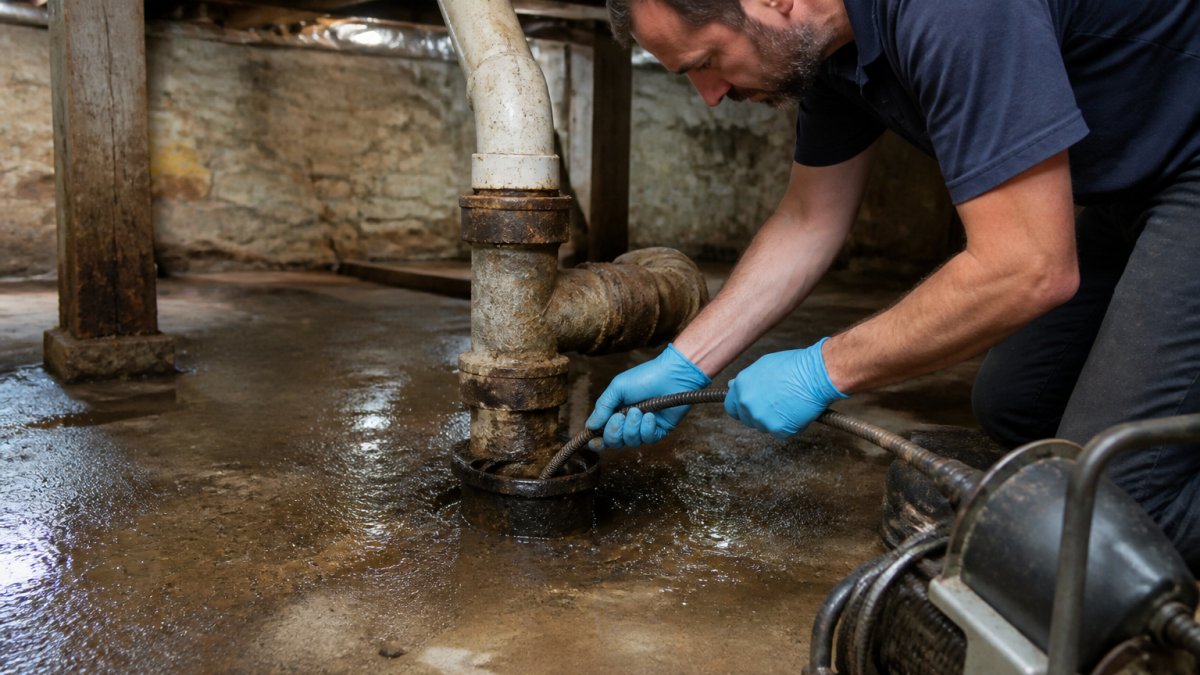
Drain snaking rotates a cable through the pipe to break up or hook the blockage.
Hydro jetting removes the entire blockage plus the buildup surrounding it, clearing not just the obstruction but the conditions that created it.
Hydro Jetting vs. Drain Snaking: Which Method Actually Works
Both methods clear clogs, but they work in fundamentally different ways.
Drain snaking uses a rotating metal cable with a hook or auger.
The limitation: snaking doesn't clean the pipe walls. It punches a hole through the blockage but leaves grease, sludge, and scale in place.
For restaurants, hydro jetting is the stronger choice because it addresses the actual problem: grease and sludge accumulation, removing the conditions that create future clogs.
Snaking suits occasional emergency clogs in residential settings.
Restaurant Drain Maintenance Schedule: How Often Should You Service?
Most articles answer this with a single number, 'every six months' or 'annually', but two restaurants with the same cover count can have completely different drain risk. A better approach is a decision framework built on four inputs: kitchen volume, drain history, pipe condition, and which line you are talking about.
Input 1: Kitchen volume and grease load
Volume sets the baseline interval, the starting point, not the answer.
- High volume (roughly 200+ covers daily, heavy frying and grilling): a common starting interval is every 3-6 months on the main line.
- Medium volume (roughly 100-200 covers daily): 6-12 months is a reasonable baseline.
- Lower volume (under 100 covers daily, limited frying): 12-18 months may be sufficient, with an annual inspection regardless.
These are starting points. The next three inputs move the interval in either direction.
Input 2: Drain history
This is the input most schedules ignore, and it is often the most predictive. Ask:
- How many slow-drain complaints did we log in the past 12 months?
- How many emergency calls did we make?
- Did any line clog more than once?
A single repeat clog on the same line signals shortening the interval for that line, not the whole system. A restaurant with zero drain events in two years can extend the interval and lean on inspection.
Input 3: Pipe condition and material
Pipe condition determines how often you service and whether jetting is appropriate.
- Relatively new PVC or sound cast iron: can typically handle standard commercial jetting pressures and follow the volume-based interval.
- Older cast iron with corrosion or scale: may need more frequent, lower-pressure cleaning, and a camera inspection before each service.
- Lines with known cracks, offsets, or bellies: jetting may not be the right tool. These need repair evaluation first.
A camera inspection is the only reliable way to know which category your line falls into, and it gives you a baseline video to compare against at the next service, turning 'how often' from a guess into a measured decision.
Input 4: Which line you are servicing
Not every drain carries the same load, and treating them as one system leads to over-servicing some lines and under-servicing others.
- Main sewer line: carries everything from the kitchen and typically accumulates the most grease and sludge. This is usually the highest-priority line and the one on the shortest interval.
- Floor drains: collect grease, food particles, and mop water. They clog from the top down as much as the bottom up, and benefit from routine jetting plus daily screening.
- Dishwashing station lines: carry high volumes of soap scum, food solids, and grease. Soap scum binds with grease and creates a particularly stubborn composite deposit.
- Three-compartment sink and prep sink lines: moderate grease load, but often undersized for the volume they see.
A practical pattern: the main line on the shortest interval, dishwashing and floor drain lines on a middle interval, and remaining lines on inspection-driven service.
A conditional schedule you can actually use
Combine the four inputs into a simple rule set:
- Start with the volume-based interval for your main line.
- Shorten the interval for any line with a repeat clog in the past 12 months.
- Shorten further if a camera inspection shows heavy scale, corrosion, or a line that is already partially restricted.
- Extend the interval only for lines with clean inspection results and no history of clogs.
- Reassess after every service. The camera footage from this visit is the best predictor of the next interval.
When to call for service before the scheduled date
A schedule is a floor, not a ceiling. Call for service sooner if you notice:
- Drains draining noticeably slower than they did a month ago
- Gurgling sounds from floor drains or sinks
- Recurring odors from drains that were previously neutral
- Water backing up in one fixture when another is used
These early signals mean buildup is restricting flow. Addressing them on a scheduled visit is far less disruptive than addressing them during service.
A professional assessment turns this framework into a specific plan: the technician evaluates pipe condition with a camera, reviews your drain history, and recommends intervals per line rather than one system-wide number.
Real Financial Benefits: Emergency Repair Costs You'll Avoid
The financial case for hydro jetting isn't that the service is cheap, it's that the alternative is expensive in ways that don't show up on a single invoice. To compare honestly, separate what drives the cost of the service from what drives the cost of a failure.
What actually drives the price of a hydro jetting service
There's no single flat rate for commercial drain jetting. The price is built from several variables:
- Line length and access. A short floor drain run close to the cleanout is a different job than a long main sewer line with limited access points. More access work means more labor time.
- Line diameter. Larger commercial mains require larger nozzles and more water volume, which changes the equipment and the time on site.
- Degree and type of buildup. Light grease film clears faster than years of hardened grease, sludge, and mineral scale. Heavily fouled lines may need multiple passes.
- Number of lines serviced. Jetting one main line is not the same scope as servicing every floor drain, dishwashing station, and main in the kitchen.
Because of these variables, the useful comparison isn't 'jetting versus snaking' per visit, it's 'planned maintenance versus unplanned failure' over a year.
The real cost of a backup during service
When a kitchen drain backs up mid-service, the plumbing invoice is only one line item. The others are harder to see but often larger:
- Lost covers. A two-hour closure during a busy dinner service removes a full seating turn from the books. For a full-service restaurant, that is the single biggest number on the page.
- Staff cost. Kitchen and front-of-house staff are still on the clock while the line is down, and some may need overtime to recover the lost service.
- Emergency service premium. Same-day or after-hours calls are priced higher than scheduled maintenance.
- Cleanup and product loss. Wastewater on the floor means discarded product, sanitation work, and possibly a partial shutdown of adjacent stations.
A simple return-on-maintenance way to think about it
You don't need a spreadsheet to make this decision. Ask three questions:
- How many emergency drain calls did we pay for in the last 12 months? Add the invoices. That number is your current baseline.
- What did each backup cost beyond the plumbing bill? Estimate lost covers, overtime, and cleanup. Even a rough figure is usually larger than the service invoice.
- What would a scheduled maintenance plan cost over the same 12 months? Compare that to the total from questions 1 and 2.
For most restaurants with a history of slow drains or repeat clogs, the scheduled plan comes out ahead, not because jetting is cheap, but because the failure it prevents is expensive across several budgets at once. Restaurants with clean drain history and low volume may find annual inspection plus jetting as needed is the better fit. Make the comparison with your own numbers, not a generic pitch.
Where hydro jetting does not save money
Hydro jetting won't fix a collapsed pipe, a severely corroded line, or a chronic bellied section that holds water. In those cases, jetting is a temporary measure at best, and the real cost is the repair or replacement the pipe needs. A camera inspection before service separates a maintenance decision from a repair decision, skipping it is how operators pay for jetting on a line that needed something else.
Is Hydro Jetting Safe for Your Restaurant's Pipes?
This question comes up often from owners with older buildings.
The answer is yes, hydro jetting is safe for most commercial restaurant pipes when performed by professionals who understand your system.
Modern PVC and cast iron pipes in commercial installations withstand hydro jetting pressures.
The real risk comes with severely damaged pipes.
We always recommend a video inspection first, especially in older buildings.
For restaurants in sound buildings with intact pipes, hydro jetting is safe and effective.
Understanding hydro jetting benefits for restaurants is essential, as maintaining clear, efficient drains is critical to restaurant operations. Contact Jersey Shore Sewer & Drain Cleaning for a free consultation.
Frequently Asked Questions
How often should a restaurant hydro jet its drain lines?
Frequency depends on kitchen volume and drain history. High-volume restaurants with heavy grease loads typically benefit from quarterly or bi-annual hydro jetting service. Lower-volume establishments may need it annually or every 18 months. Signs you need immediate service include slow drains, backups, or foul odors. A professional inspection can assess your specific situation and recommend a maintenance schedule that prevents emergency calls while controlling costs.
Can hydro jetting remove grease from restaurant drain lines?
Yes. High-pressure water jetting removes grease buildup, sludge, and food waste that accumulate on pipe walls. Unlike drain snaking, which punches through clogs, hydro jetting cleans the full circumference of the pipe interior, restoring optimal flow capacity. This makes it especially effective for restaurant kitchens where grease deposits are the primary cause of blockages and slow drains.
Is hydro jetting safe for restaurant plumbing?
Hydro jetting is safe for most modern restaurant plumbing when performed by licensed professionals. However, pipes older than 40-50 years, those with existing cracks, or systems with compromised structural integrity may be at risk of damage. A video inspection before hydro jetting identifies pipe condition and determines suitability. Your plumber can assess your system and recommend the safest approach for your restaurant's age and pipe material.
How is hydro jetting different from snaking a drain?
Drain snaking uses a rotating cable to break through clogs but doesn't clean pipe walls. Hydro jetting uses high-pressure water to scour the entire interior surface, removing grease, sludge, mineral deposits, and soap scum. While snaking provides temporary relief, hydro jetting restores drainage efficiency and prevents future clogs longer, making it the more effective preventative maintenance method for busy restaurant kitchens.