 how-to
Preventing Sewage Backups in Older Homes
Table of Contents
- Why Older Homes Face Higher Sewage Backup Risk
- Inspect Your Sewer Line to Identify Problems Early
- Address Tree Roots in Sewer Line Before Damage Occurs
- Install a Backwater Valve for Backup Protection
- Manage Stormwater and Heavy Rain Risks
- Control What Goes Down Your Drains
- Create Your Sewer Maintenance Schedule
- Respond Safely If a Backup Occurs
- Frequently Asked Questions
Last Updated: October 11, 2026
Why Older Homes Face Higher Sewage Backup Risk
Pipes installed 50, 80, or even 100 years ago face constant stress from tree roots, shifting soil, and corrosion.
Clay and cast-iron pipes were standard in older construction. Clay cracks and separates; cast iron rusts from the inside out.
Heavy rain overwhelms older municipal sewer systems.
Tree roots seek out sewer lines for moisture and nutrients. Once they find a crack or joint, they penetrate and grow, potentially blocking the line within months.
Homes built before 1980 face exponentially higher backup risk than newer construction. The good news? You can succeed at preventing sewage backups in older homes with the right steps.
Inspect Your Sewer Line to Identify Problems Early
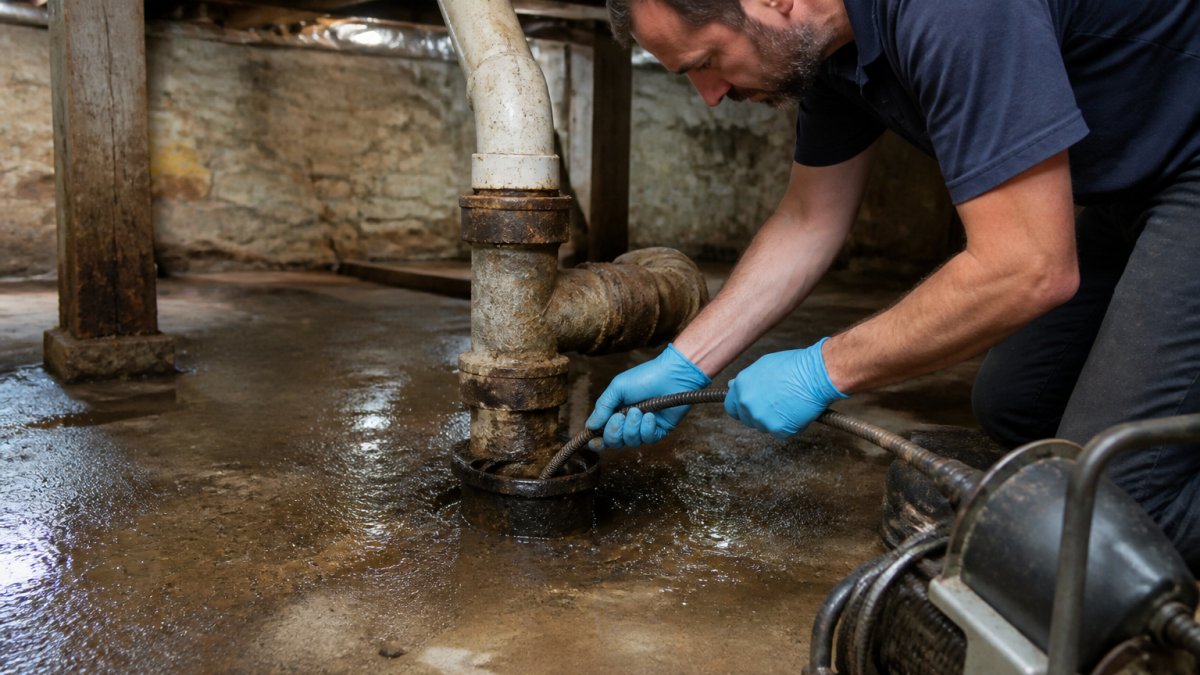
Video inspection is the only way to see what's happening inside your main sewer line. A camera on a flexible rod transmits live footage to a monitor, revealing cracks, blockages, root intrusion, and pipe condition.
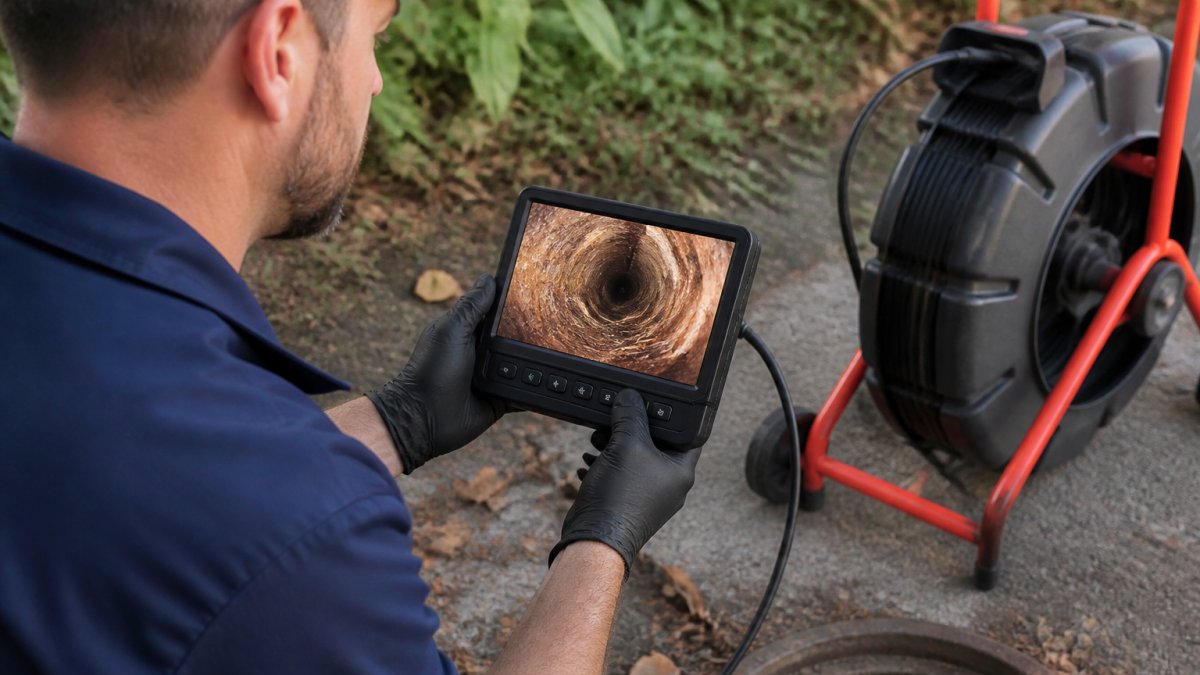
What a Video Inspection Reveals
A video inspection shows the exact problem, not guesses. This clarity prevents unnecessary repairs: if your line is fine, you don't replace it; if it's failing, you know exactly where and why.
The inspection documents your pipe material, which helps you plan appropriate repairs.
Older-Home Inspection Checklist
When scheduling a video inspection, ask the plumber to document these items:
Pipe Material and Age
- Confirm whether your line is clay, cast iron, concrete, or a mix. Clay and cast iron deteriorate predictably over 60-80 years.
- Ask the plumber to note the approximate installation date if visible.
Visible Damage Patterns
- Cracks and fractures: Clay pipes show longitudinal cracks; cast iron shows rust staining or holes.
- Joint separation: Gaps where pipe sections meet allow soil infiltration and root entry, common in clay lines over 50 years old.
- Corrosion and scaling: Cast iron develops internal rust buildup that narrows the opening; concrete pipes show spalling.
Root Intrusion Severity
- Minor (hairline roots at joints): Manageable with hydro jetting every 1-2 years.
- Moderate (roots penetrating the pipe): Requires jetting plus root barriers or spot repair.
- Severe (roots filling 50%+ of the pipe): Signals replacement or trenchless lining is necessary.
Cleanout Condition and Access
- Locate your main cleanout (usually a capped fitting in the basement or yard). Note if it's buried, corroded, or missing, you'll need access for future maintenance.
- Check whether cleanouts exist at property lines or direction changes; older homes often lack these.
Prior Repairs
- Ask whether the line shows patches or sections of newer pipe spliced into older material, which can create joint problems.
Grading and Drainage Layout
- Note whether downspouts, sump pumps, or foundation drains discharge into the sanitary line, a common problem in older homes that increases backup risk.
How Often to Schedule Inspections
Homes older than 50 years should get inspected every 3-5 years; homes older than 80 years benefit from annual inspections. Preventive inspection costs $150-$300, far less than emergency repairs or pipe replacement.
Address Tree Roots in Sewer Line Before Damage Occurs
Tree roots in sewer lines are one of the most common problems in older homes. They follow moisture underground and exploit any opening in your pipes.
Identifying Root Intrusion Early
Early signs include slow drains, gurgling toilets, and patches of unusually green grass over your sewer line. Ignoring these signals allows roots to block the line completely within months.
Video inspection reveals root intrusion clearly, allowing you to act before it becomes an emergency.
Repair Options Compared: Cost, Permanence, and Suitability
Once roots are confirmed, the right repair option depends on severity, pipe material, budget, and whether the problem is recurring.
Hydro Jetting (Temporary Clearing)
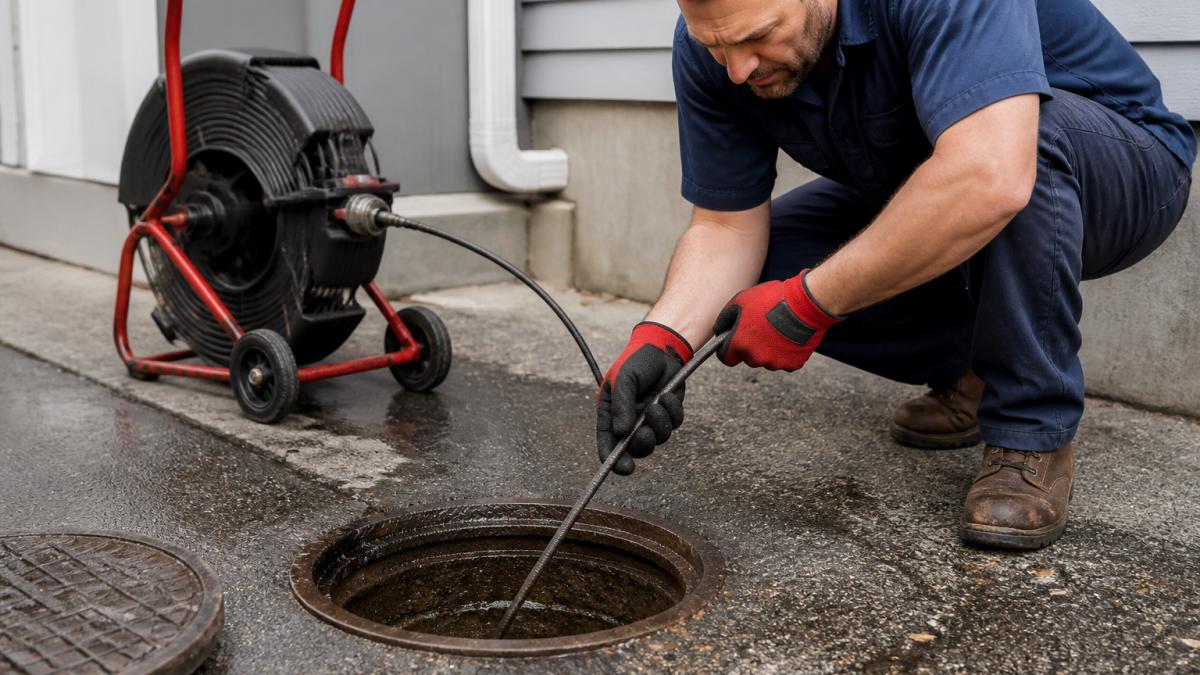
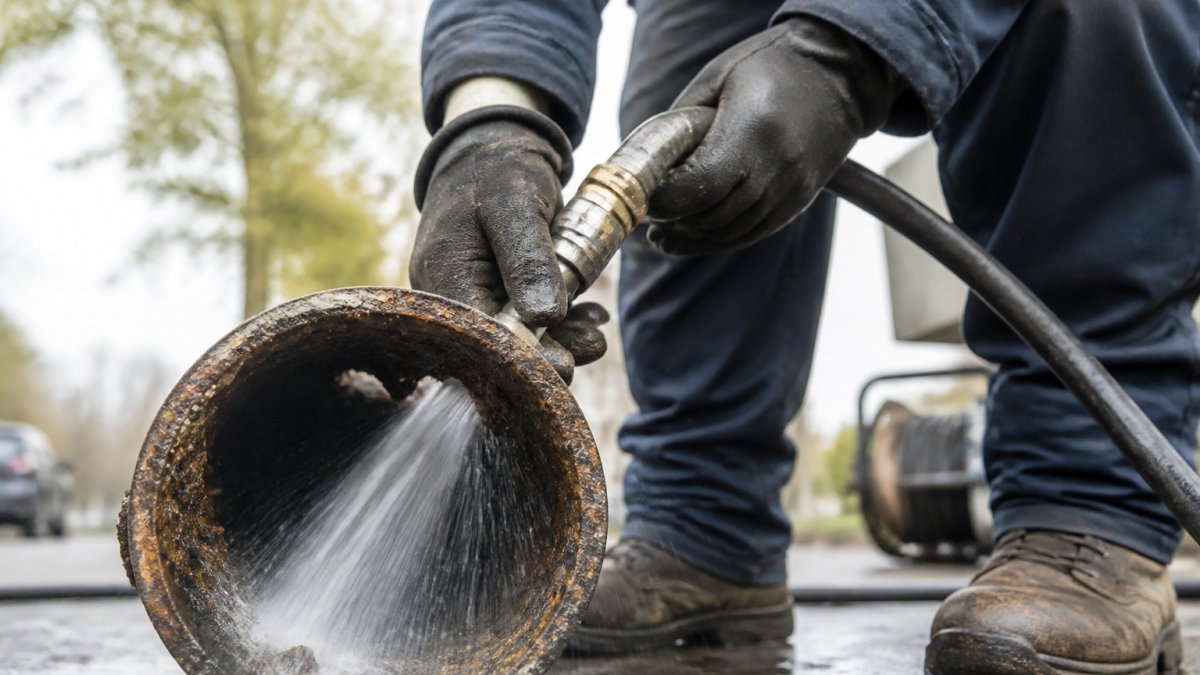
- How it works: High-pressure water (3,000-4,000 PSI) cuts through roots and clears blockages.
- Cost: $300-$600 for a typical residential line.
- Permanence: Temporary; roots regrow within 6-24 months.
- Best for: First-time root problems or situations where you want to avoid major excavation.
- Limitation: Does not repair the underlying crack or joint that allowed roots to enter.
Chemical Root Barriers
- How it works: Herbicide treatments are flushed into the line to slow root growth.
- Cost: $200-$400 per application.
- Permanence: Requires repeated applications every 1-2 years.
- Best for: Delaying major repairs or managing minor root intrusion.
- Limitation: Does not remove existing roots or repair pipe damage; only slows future growth.
Trenchless Pipe Lining (Spot Repair)
- How it works: A flexible, resin-coated tube is inserted into the damaged section and hardens, creating a new pipe inside the old one without excavation.
- Cost: $2,000-$5,000 for a typical 20-30 foot section.
- Permanence: Permanent; lasts 50+ years.
- Best for: Localized root damage in clay or cast-iron pipes when only one section is compromised.
- Limitation: Requires access to the damaged section; not suitable if the entire line is failing.
Full Pipe Replacement
- How it works: The old pipe is excavated and replaced with modern PVC or HDPE, which resists root intrusion and corrosion.
- Cost: $3,000-$10,000+ depending on line length, depth, and yard restoration.
- Permanence: Permanent; lasts 50-100 years.
- Best for: Widespread pipe failure, repeated root problems, or when the entire line is near end-of-life.
- Limitation: Most expensive option; requires excavation and disrupts landscaping.
Tree Removal
- How it works: Remove the tree causing the problem.
- Cost: $500-$3,000+ depending on tree size.
- Permanence: Permanent for that tree; roots decay over 5-10 years, but pipe damage remains.
- Best for: One specific tree causing repeated backups.
- Limitation: Does not repair existing pipe damage; only effective if one tree is the primary problem.
Choosing the Right Approach
Start with hydro jetting if it's your first root problem and the pipe is in fair condition. This buys time and costs little.
If roots return within 12 months, or if the video inspection shows the pipe has significant cracks or joint separation, move to lining or replacement. Repeated jetting becomes expensive and doesn't address the underlying damage.
For clay pipes over 80 years old with moderate to severe root intrusion, replacement often makes sense. The pipe is nearing end-of-life anyway; investing in lining extends a failing system rather than solving it permanently.
Consult your plumber about your specific pipe material and damage pattern. They can recommend the most cost-effective path forward.
Install a Backwater Valve for Backup Protection
A backwater valve is your insurance policy against sewage backup. It allows wastewater to flow out of your home but prevents it from flowing back in when the municipal system backs up.
How Backwater Valves Work
The valve sits on your main sewer line between your home and the municipal connection. Wastewater from your home flows through it normally. If pressure reverses, because the municipal line is backed up, the valve closes automatically.
Think of it as a one-way door. Sewage can leave. It cannot return.
Installation and Maintenance Requirements
Backwater valve installation requires cutting into your main sewer line. This is a job for licensed plumbers. The valve must be installed at the correct depth and angle to function properly.
After installation, the valve needs periodic inspection and cleaning. Debris can accumulate and prevent the flapper from closing fully. Annual maintenance keeps it working.
Improper installation means the valve won't protect you when you need it most.
Manage Stormwater and Heavy Rain Risks
Heavy rain is a major trigger for sewage backups in older neighborhoods. Stormwater systems share capacity with sanitary lines in many areas. When rain overwhelms the system, backup into your home follows.
You can reduce your contribution to the problem:
- Disconnect downspouts: Route roof drainage away from the municipal storm drains. Direct it to your yard or a rain barrel instead.
- Redirect sump pump discharge: If you have a sump pump, discharge it to the surface or a dry well, not into the sanitary line.
- Reduce water use during heavy rain: Every gallon you don't use during a downpour is one less gallon entering the system.
These steps won't prevent all backups, but they reduce the odds significantly. They're especially important if you live in an area prone to heavy rain or flooding.
Control What Goes Down Your Drains
What you flush matters. Grease, non-flushable items, and excessive paper accumulate in pipes and create blockages. Blockages trap water and sewage, which backs up into your home.
Common culprits:
- Grease and cooking oil: These solidify as they cool. They coat pipe walls and trap debris.
- "Flushable" wipes: These don't break down like toilet paper. They accumulate and clog lines.
- Paper towels and napkins: Thicker than toilet paper, they don't dissolve.
- Hair: Binds with grease and creates blockages.
- Feminine hygiene products, cotton swabs, dental floss: Never flush these.
The rule is simple: only toilet paper and human waste go down the toilet. Everything else goes in the trash.
For grease, pour it into a container and throw it away. Never pour it down the drain.
Create Your Sewer Maintenance Schedule
Preventing sewage backups requires a plan. Mark these tasks on your calendar:
| Task | Frequency | Why It Matters |
|---|---|---|
| Video inspection | Every 3-5 years (older homes) | Catches problems before they become emergencies |
| Sewer line cleaning | Every 1-2 years if recurring issues | Removes buildup before blockages form |
| Backwater valve inspection | Annually | Ensures the valve closes properly when needed |
| Downspout maintenance | After heavy rain | Prevents water from entering storm drains |
| Drain screen cleaning | Monthly | Catches debris before it enters pipes |
Consistency is key to preventing sewage backups in older homes. A home that gets inspected regularly and cleaned proactively rarely experiences emergencies.
Respond Safely If a Backup Occurs
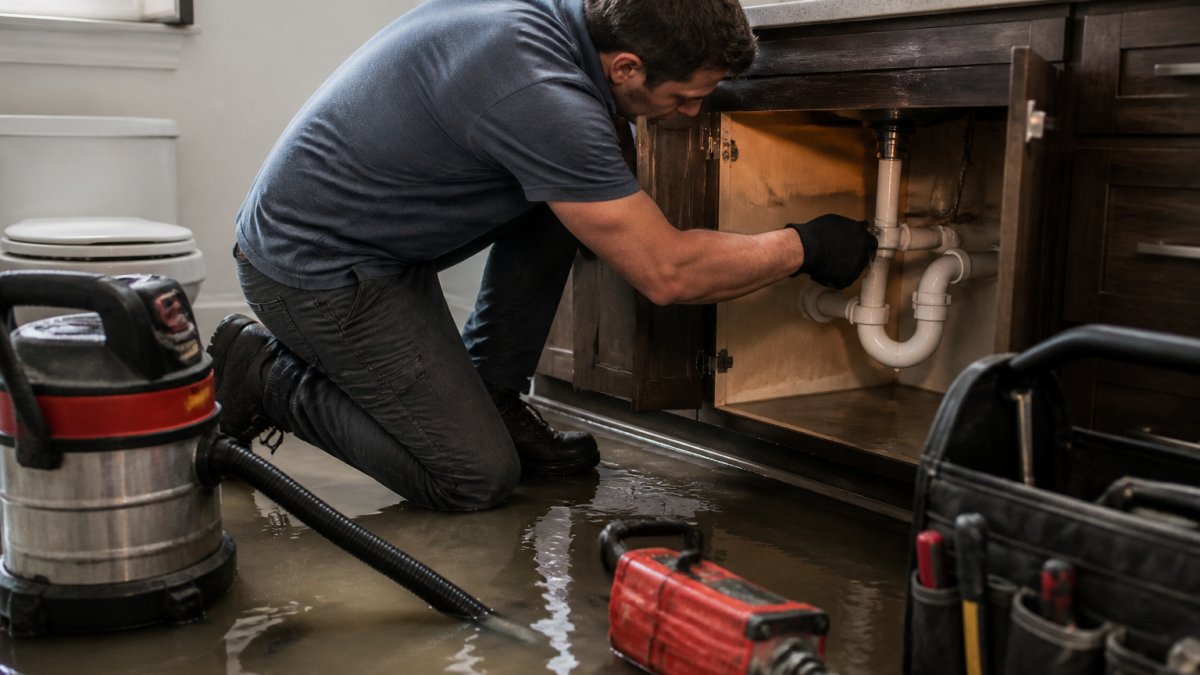
If sewage backs up into your home, act quickly but safely. Sewage contains harmful bacteria and viruses.
First, stop using water immediately. Every gallon you send down a drain makes the backup worse.
Second, call a licensed plumber. This is not a DIY situation. Professional equipment and expertise are required.
While waiting:
- Avoid contact with sewage
- Don't use toilets, showers, or sinks
- Open windows for ventilation
- Keep children and pets away from affected areas
Never try to clear a main line backup yourself. The pressure and volume are dangerous. Professional equipment handles it safely.
After the backup is cleared, get a video inspection. Backups happen for a reason.
Sewage backups in older homes aren't inevitable. They're preventable with the right maintenance and preparation. Regular inspections catch problems early.
Jersey Shore Sewer & Drain Cleaning has helped hundreds of homeowners across the region protect their properties.
Frequently Asked Questions
What can I do to prevent sewage backups in an older home?
Start with a professional sewer line inspection to identify existing damage or tree root intrusion. Install a backwater valve to prevent wastewater from flowing backward into your home. Keep grease, non-flushable items, and excessive stormwater out of your drains. Have your sewer line cleaned regularly, every 18 to 24 months for homes over 50 years old is typical. Disconnect downspouts and foundation drains from the main sewer line if they're currently connected, as they can overwhelm the system during heavy rain.
How often should an older home's sewer line be inspected?
Homes built before 1980 should have a professional sewer line inspection every 2 to 3 years, or immediately if you notice slow drains, recurring backups, or sewage odors. If an inspection reveals tree roots, cracks, or deteriorating clay or metal pipes, more frequent inspections may be necessary. A video inspection using a camera probe is the most accurate way to assess your main sewer line's condition and catch problems before they cause a backup.
Can tree roots cause sewage backups in older homes?
Yes. Tree roots are one of the most common causes of sewer backups in older homes. Roots seek out moisture and can penetrate even small cracks in clay, cast iron, or concrete pipes. Once inside, they grow and create blockages that trap grease, paper, and other debris. A sewer line inspection using video technology will show whether root intrusion is present. If roots are the problem, hydro jetting or root removal can clear them, but you may need to remove or trim the tree to prevent recurrence.
Does a backwater valve help prevent sewer backups?
A backwater valve is one of the most effective tools for preventing sewage from flowing backward into your home during municipal system overflows or heavy rain. The valve allows wastewater to flow out but closes automatically if pressure reverses. Installation requires a professional plumber and must comply with local codes. A backwater valve is especially valuable for older homes in areas prone to sewer backups, though it works best as part of a complete prevention plan that includes regular cleaning and inspection.