 how-to
Emergency Drain Cleaning for Basement Flooding
Table of Contents
- What to Do When Your Basement Floods: First 30 Minutes
- Basement Floor Drain Overflowing: Diagnose the Cause First
- Emergency Drain Cleaning: A Safe Step-by-Step Procedure
- Sewage Cleanup After Basement Flooding: Contamination and Safety
- When to Call an Emergency Plumber for a Flooded Basement
- Water Removal, Drying, and Mold Prevention
- Preventing the Next Flood: Backwater Valves and Maintenance
- Frequently Asked Questions
Last Updated: October 20, 2026
What to Do When Your Basement Floods: First 30 Minutes
Water in a basement is a race against time, and the first move most people make is the wrong one. Emergency drain cleaning for basement flooding starts with two things you should not do: wading in and plugging in a pump.
The Federal Emergency Management Agency reports that just one inch of floodwater can cause up to $25,000 in damage to a home (FEMA flood damage facts).
Cut the Power and Protect Yourself
Kill the electricity before anything else. If you can reach the main breaker or fuse box without touching water, shut off the whole house. If the panel sits in the flooded area, do not go near it.
Once the power is off, suit up. Rubber boots and waterproof gloves are the minimum. Floodwater in a basement can carry sewage, bacteria, and sharp debris. Keep children and pets out of the space entirely.
Stop the Source Before You Pump
Pumping water out while the source is still flowing wastes your effort and can make things worse. If the water is rising, find out why before you drag out the shop vacuum.
- If water is backing up from a floor drain, stop adding water to the system. No laundry, no showers, no dishwasher.
- If the sump pump has failed, a backup pump or a wet/dry vacuum can buy time.
- If water is seeping through foundation cracks or the wall-floor joint, you are likely dealing with groundwater, not a drain problem.
Basement Floor Drain Overflowing: Diagnose the Cause First
A basement floor drain overflowing is a symptom, and the treatment depends entirely on the diagnosis. There are four common causes, each calling for a different response. The fastest way to sort them out is to read the timing, the water itself, and what else in the house is misbehaving.
A blocked drain line means water has nowhere to go and backs up into the lowest point in the house. A sewer backup sends wastewater up through the drain when the main line is clogged or the municipal system is overwhelmed. A failed sump pump lets groundwater rise unchecked. Stormwater or groundwater intrusion pushes water in through cracks, joints, and the cove base, bypassing the drain system entirely.
A Symptom-Based Diagnostic Guide
Use these patterns to narrow the cause before you call anyone:
- Backup during heavy rain, water runs clear: suspect stormwater or a surcharge in the municipal main. Check whether neighbors on the block have wet basements at the same time. If several do, the problem is likely the municipal system, not your pipes.
- Backup after running the washing machine, dishwasher, or flushing a toilet: suspect a clogged drain or sewer line downstream of those fixtures. The timing is the tell.
- Water rising from the floor drain with no fixture use and no rain: suspect a blocked main line or a failed sump pump. If the sump pit is full and the pump is not running, the pump is the place to start.
What Each Diagnosis Means for Your Next Move
The diagnosis drives the response. A blocked drain line or sewer backup calls for emergency drain cleaning, covered in the next section.
Clearing a floor drain that is not the source wastes time while water keeps coming in, and it can push you toward a repair you do not need. Match the response to the cause, and you solve the right problem the first time.
Emergency Drain Cleaning: A Safe Step-by-Step Procedure
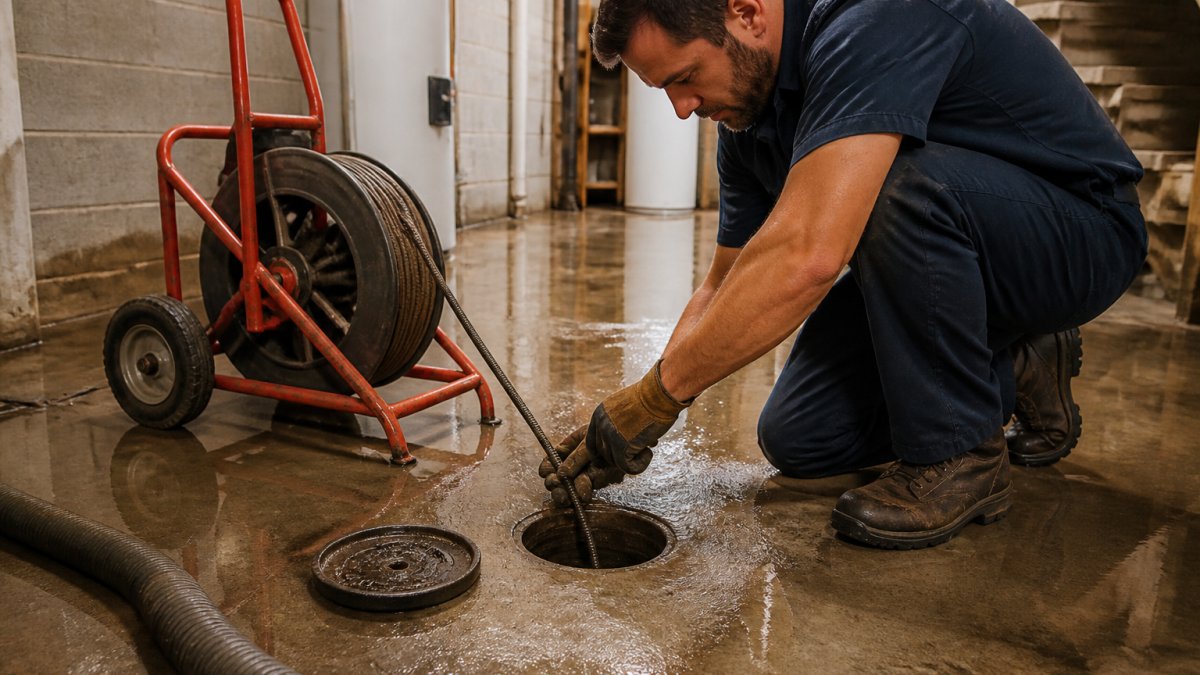
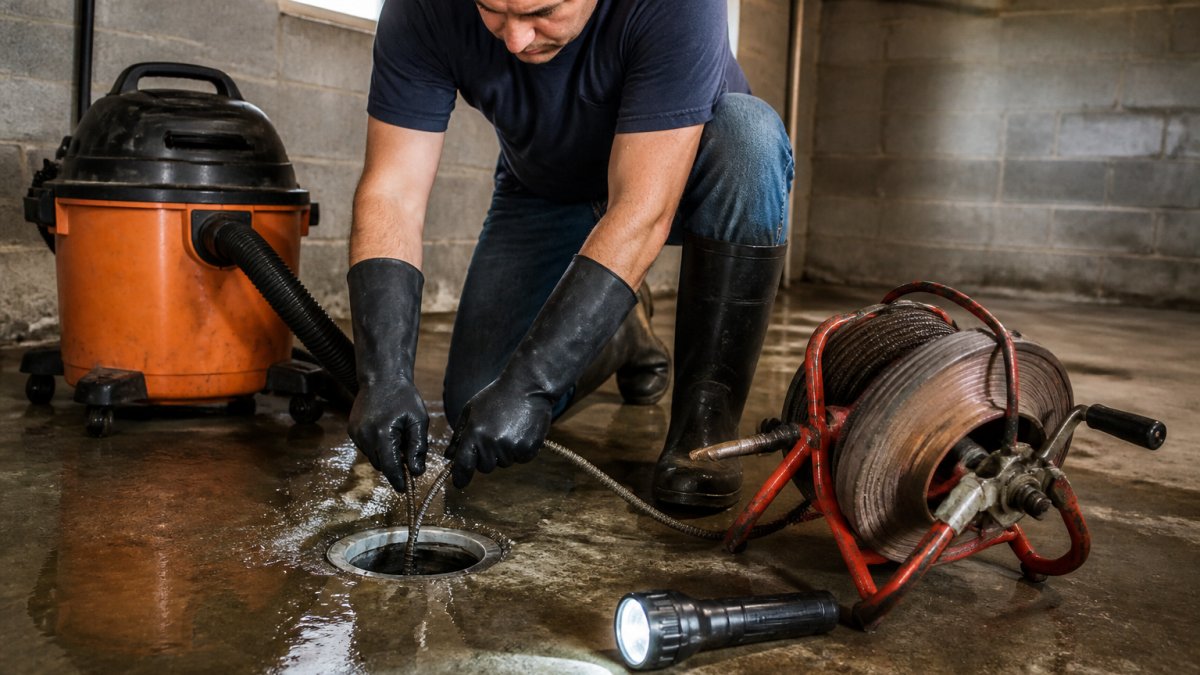
Emergency drain cleaning is the process of clearing a blocked floor drain, catch basin, or sewer line to restore flow and stop water from backing up into a basement.
Step 1: Confirm the Water Is Off and the Area Is Safe
Before you touch the drain, confirm the electricity to the basement is shut off at the breaker. If the panel is in the flooded area, stop here and call an electrician or the utility. Put on rubber boots, waterproof gloves, and eye protection, and keep children and pets out. If the water smells like sewage or looks dark, treat it as contaminated and limit contact.
Step 2: Clear the Surface Before You Snake
Start at the surface. Remove the strainer, scoop out debris by hand (gloved), and check the catch basin if your basement has one. Many "clogs" are just hair, silt, and construction debris sitting on top.
Stop point: If the drain begins moving water after surface clearing, you have bought yourself time. Do not snake a drain that is already flowing.
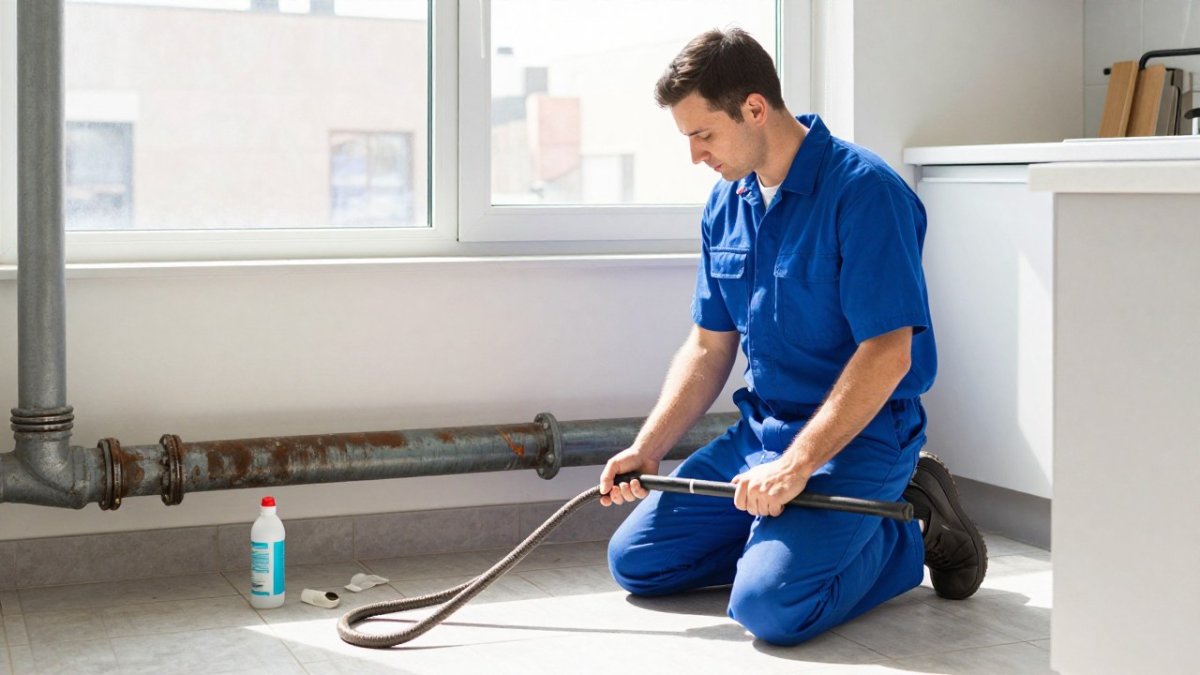
Step 3: Try a Plunger, Then a Hand Snake
A cup plunger works on a floor drain the same way it works on a sink: seal the opening, add enough water to cover the cup, and plunge in short, firm strokes.
Stop point: If the snake meets solid resistance within a few feet, stop. That pattern often means a collapsed line, tree roots, or a belly in the pipe, none of which a hand snake will fix.
Step 4: Know When to Stop and Call
Stop your DIY attempt and call a professional if any of the following is true:
- The drain will not clear after a reasonable attempt with a plunger and hand snake.
- Water is still rising after you stopped using fixtures.
- The backup involves sewage or dark, foul-smelling water.
A plumbing professional with a camera and a jetter will solve in an hour what might take you a weekend, and the camera inspection finds the actual cause instead of the symptom.
What Not to Do During a Sewer Backup
During a sewer backup, the wrong move can turn a messy problem into a hazardous one. Here is what to avoid:
- Do not pour chemical drain cleaner into a backed-up main. It sits against the clog, can damage pipes, and creates a chemical hazard if a plumber later has to open the line.
- Do not keep using water fixtures. Every flush and every load of laundry adds volume to a system that cannot drain.
- Do not run a pressure washer or high-pressure jetter yourself. Hydro jetting is a professional tool. Used wrong, it can blow out old pipes.
Homeowners who call us after three failed attempts at the same clog usually have a structural problem a snake cannot fix.
Sewage Cleanup After Basement Flooding: Contamination and Safety
Sewage cleanup after basement flooding is not the same as drying out a leak. Sewage carries bacteria, viruses, and parasites, and the cleanup standard depends on how contaminated the water is.
Clean water from a supply line is the easiest category. Gray water from a washing machine or dishwasher carries some contaminants.
Here is what that means in practice:
- Discard porous materials that soaked up sewage. Carpet, padding, and drywall usually cannot be saved.
- Disinfect hard surfaces with an appropriate cleaner after removal.
- Wear protective gear, including eye protection and a mask, during cleanup.
If the contamination is extensive, a restoration professional is the right call. The EPA guidance on mold and moisture control is a useful reference for what to do after the water is out.
When to Call an Emergency Plumber for a Flooded Basement
Call an emergency plumber for a flooded basement when water is rising, when the backup involves sewage, when the cause is not obvious, or when you have already tried the basics and the drain still will not clear.
If the water is clean, contained, and you found the source, you can often manage the removal yourself. If any of those is not true, call a professional.
A few specific triggers mean call now, not later:
- Sewage is backing up into the basement.
- Water is still rising after you stopped using fixtures.
- The floor drain will not clear after a reasonable attempt.
Water Removal, Drying, and Mold Prevention
Water removal is only half the job. Drying is the half that prevents mold, and mold can start growing on wet materials within a couple of days. The CDC guidance on mold after flooding is blunt about it: dry everything within 24 to 48 hours or expect problems.
Move in this order:
- Extract standing water with a wet/dry vacuum or pump.
- Remove saturated carpet, padding, and any porous material you cannot dry.
- Set up fans and a dehumidifier. Air movement matters as much as heat.
- Pull baseboards and check the wall cavity if water reached the drywall.
- Keep the space dry for several days and recheck for damp spots.
Skip this and you will be dealing with a musty smell and a much bigger remediation bill within a month.
Preventing the Next Flood: Backwater Valves and Maintenance
Prevention comes down to three things: a backwater valve, a working sump pump, and routine drain maintenance.
For the sump pump, test it before storm season. Pour water into the pit and confirm the float triggers the pump.
Routine maintenance is the unglamorous part. Schedule a drain inspection every year or two, especially in older homes with cast iron or clay lines.
Frequently Asked Questions
How much does it cost to clean up a flooded basement?
Cleanup costs depend on how much water entered, whether it was contaminated sewage, and how much material has to be removed. Sewage backups cost more than clean rainwater because affected drywall, insulation, and flooring usually have to be discarded and the space disinfected. Most homeowners pay a service call plus per-hour or per-job labor, and emergency rates can apply after hours. Jersey Shore Sewer & Drain Cleaning does not publish fixed prices because every job differs; call for a free quote before work begins so you know the scope.
How can I tell whether a basement flood is caused by a sewer backup?
Look at where the water enters and what it contains. If water rises from a floor drain, toilet, or laundry standpipe when you run other fixtures, that points to a blocked sewer line. Sewage backups usually carry a strong odor and dark, cloudy water with visible solids. Rainwater or groundwater tends to seep through foundation cracks and walls and stays relatively clear. If you are unsure, stop using water in the house and have a plumbing professional run a video inspection of the sewer line.
Should I use a drain cleaner when my basement is flooding?
No. Chemical drain cleaners are a poor choice during an active flood. They sit in standing water, can splash onto skin and eyes, and may damage older pipes without clearing the main blockage. If the backup is in the sewer line, the chemical never reaches the clog anyway. Instead, stop running water, keep clear of the drain, and call for emergency drain cleaning. A plumber can clear the line mechanically with a snake or hydro jetting, which is safer and more effective for a main line blockage.
How quickly should I call a plumber for a flooded basement?
Call as soon as the water is rising and you have cut the power. Standing water causes more damage every hour, and sewage backups create a health hazard that gets worse the longer it sits. Many providers offer 24-hour service and same-day appointments. Jersey Shore Sewer & Drain Cleaning has operated since 1990 and offers 24/7 emergency response, so you can reach someone at any hour to start emergency drain cleaning and water removal before mold and structural damage set in.
A flooded basement is stressful, but the right response turns a crisis into a manageable cleanup. If water is rising, sewage is backing up, or the drain will not clear, do not wait it out. Jersey Shore Sewer & Drain Cleaning offers 24/7 emergency service, free quotes, and video inspections that find the real cause instead of guessing. Call us, and we will get your basement dry and your drains flowing again.