 ultimate-guide
Professional Drain Cleaning Services NJ: 2026 Guide
Table of Contents
- Signs of a Clogged Sewer Line You Should Never Ignore
- Hydro Jetting Services NJ Homes and Businesses Rely On
- Video Pipe Inspection Services: Seeing the Problem Before You Pay
- The Cost of Professional Drain Cleaning and What Drives It
- DIY vs. Professional Drain Cleaning Services NJ Homeowners Weigh
- Emergency and Same-Day Service: What to Expect When You Call
- Seasonal Drain Maintenance and Preventative Care
- Conclusion
- Frequently Asked Questions
Last Updated: September 10, 2026
Signs of a Clogged Sewer Line You Should Never Ignore
Professional drain cleaning services nj homeowners call for usually start with the same complaint: something that drains slowly, then stops entirely. A clogged sewer line rarely fails without warning. Most properties give you weeks of signals before a full backup.
The clearest signs: multiple slow drains at once, gurgling toilets, sewage odors near floor drains, and water pooling around basement drains. One slow sink is a local clog; several slow fixtures across different floors points to the main line.
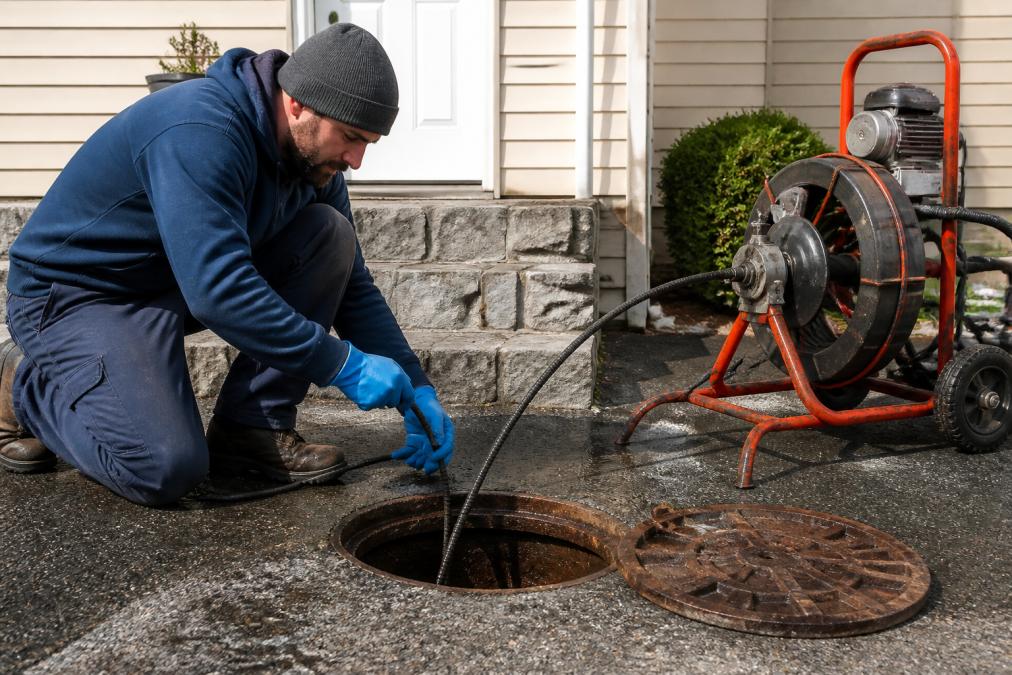
A single slow drain responds well to a plunger or drain snaking. When every drain slows together, the blockage sits in the main line, and snaking only punches a hole through it, roots, grease, and scale close that hole within weeks.
Watch for these warning signs:
- Two or more fixtures draining slowly at the same time
- Toilet water rising when you run the washing machine
- Sewage odor from floor drains or cleanouts
- Gurgling sounds after flushing
- Dark water backing up into a tub or shower
If two or more of these signs are present, stop running water and call a licensed plumber for an inspection before the next backup.
Hydro Jetting Services NJ Homes and Businesses Rely On
Hydro jetting uses high-pressure water, often 3,000 to 4,000 psi, to scour the full interior wall of a pipe rather than punching a hole through the blockage, so results hold longer than snaking (the EPA).
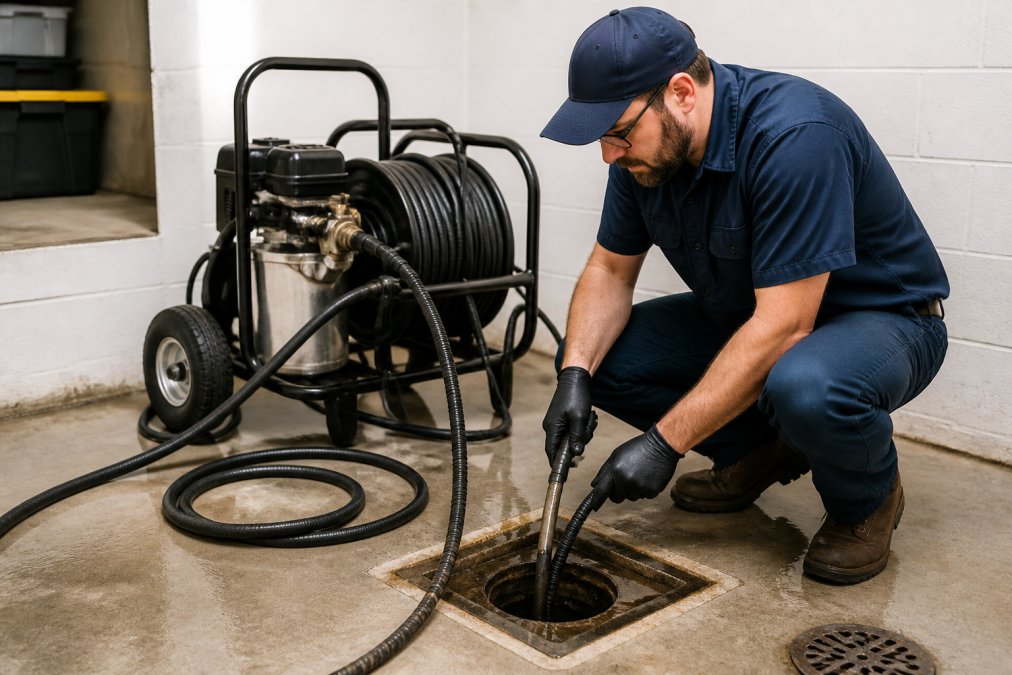
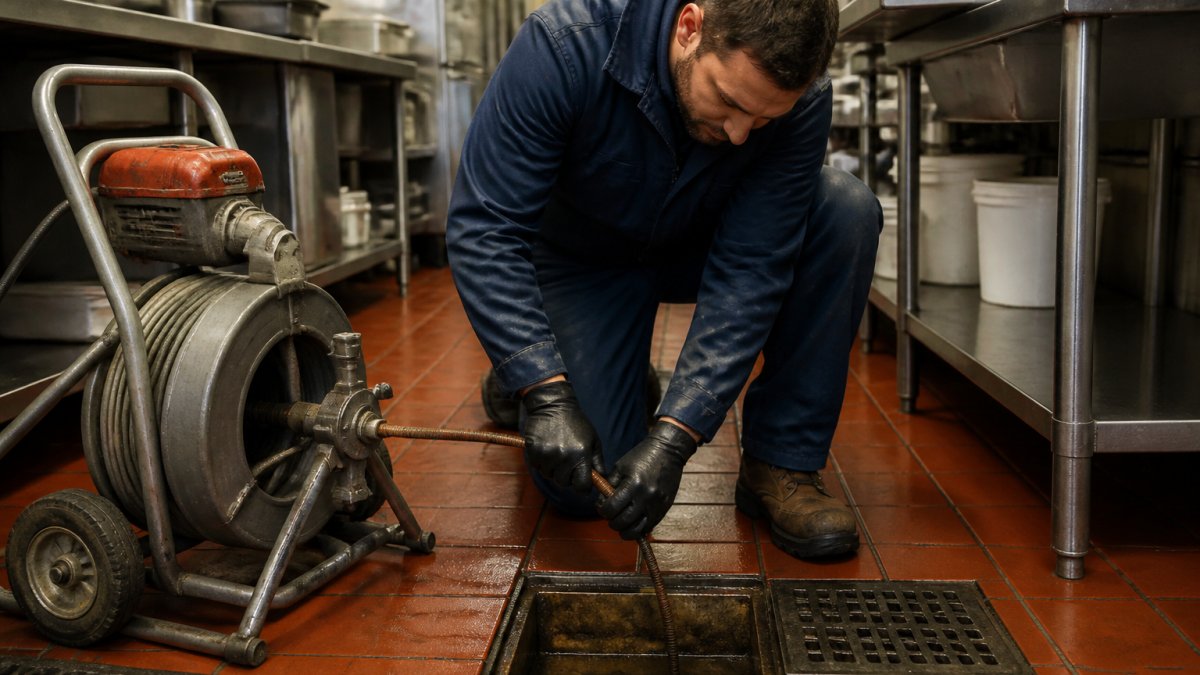
A cable snake clears a channel; hydro jetting restores the pipe's original diameter by removing grease, scale, and root mass from the entire circumference. For main line cleaning in restaurants, apartment buildings, and older homes, that full-wall cleaning prevents the same clog from returning in a month.
The method isn't right for every pipe. Jetting a line with a pre-existing crack or failing joint can widen the damage, so reputable providers run a camera first, confirm pipe integrity, and adjust pressure to the pipe's material and condition, and will recommend trenchless repair or descaling when jetting isn't safe.
For commercial kitchens, hydro jetting pairs with grease trap cleaning to keep the entire drainage system flowing. For residential plumbing, it's the go-to fix for root intrusion and years of buildup that snaking can't touch.
Video Pipe Inspection Services: Seeing the Problem Before You Pay
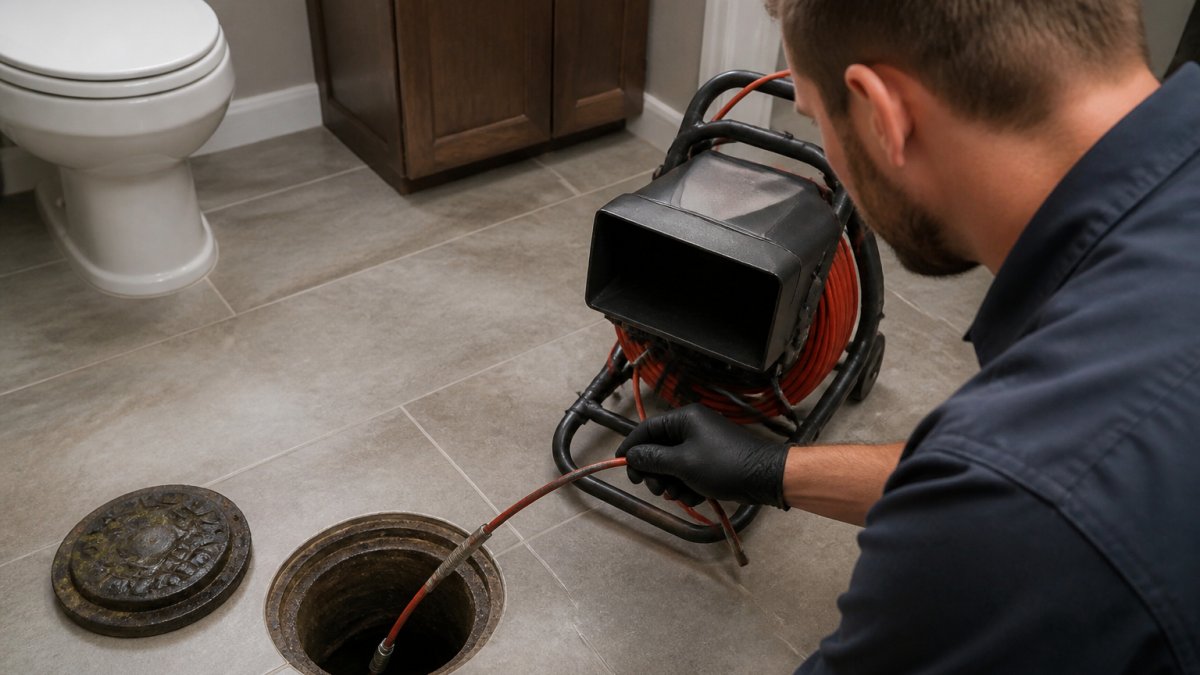
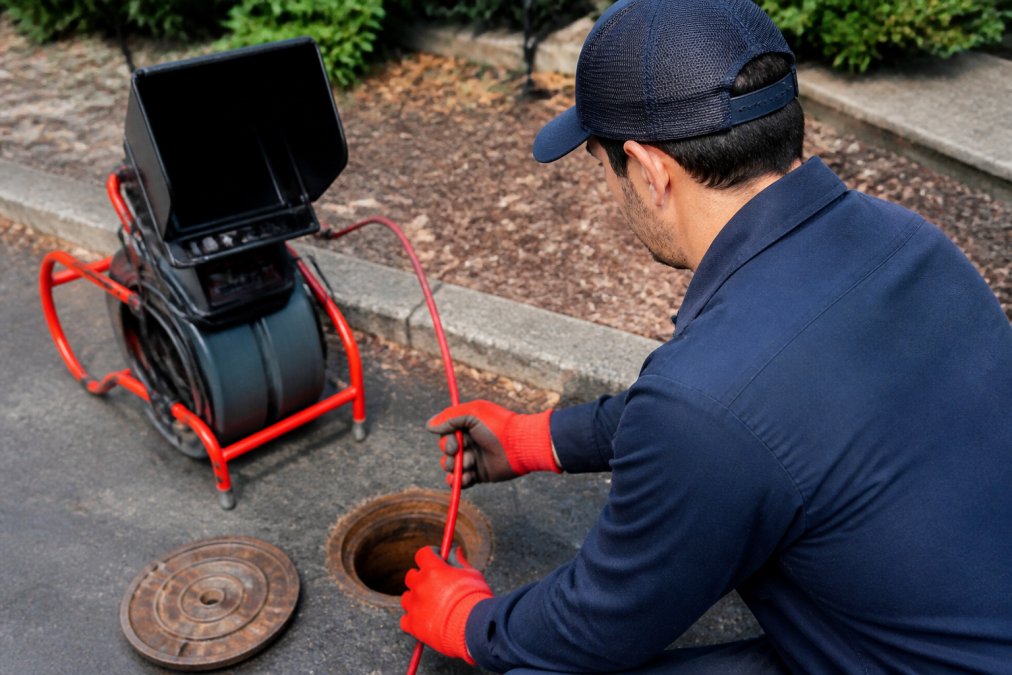
Video pipe inspection services use a waterproof camera on a flexible reel to record the inside of your sewer line in real time. The technician sees the exact location, cause, and severity of the blockage on a monitor, and you can watch with them.
This answers the question every homeowner asks: how do I know the diagnosis is real? A camera doesn't guess, it shows root intrusion at a specific distance from the cleanout, a collapsed section, a belly where waste pools, or grease and scale buildup.
A thorough inspection report typically includes:
- Footage of the full line from cleanout to municipal connection
- Depth and location of any defect, marked in feet from the access point
- Cause of the blockage: roots, grease, scale, offset joint, or collapse
- A recording or photos you keep
For real estate transactions, this matters. Buyers and lenders increasingly ask for a sewer scope before closing, and a clear video report with a written summary satisfies that request far better than a verbal opinion. If you're selling, scheduling the inspection early avoids surprises during negotiation.
The Cost of Professional Drain Cleaning and What Drives It
Most providers won't quote a real number over the phone because the price depends on what's actually in the line. Knowing the ranges and the levers that move them helps you tell a fair quote from an inflated one.
Residential work falls into rough tiers: a single-fixture clog cleared by snaking at an accessible cleanout is the low end, a main line cleared by hydro jetting sits in the middle, and a job needing camera inspection, root cutting, or trenchless repair lands at the top. Commercial work, restaurants, multi-family buildings, grease-laden kitchen lines, prices higher due to line diameter, grease volume, and after-hours scheduling.
Factors that move the price:
| Factor | What It Changes | Why It Matters |
|---|---|---|
| Access point | Cleanout vs. pulling a toilet or cutting a wall | Hard-to-reach access adds labor hours |
| Blockage type | Grease, roots, scale, or a foreign object | Roots and scale take longer and may need cutting heads |
| Line length | Distance from cleanout to the municipal connection | Longer runs need more hose, more time, more water |
| Pipe material and condition | Cast iron, clay, PVC, Orangeburg, or a belly | Fragile or collapsed pipe rules out jetting and points to repair |
| Line diameter | 2-inch branch vs. 4-inch or larger main | Bigger pipe needs bigger equipment and more volume |
| Timing | Standard hours vs. nights, weekends, holidays | Emergency and after-hours calls carry a premium |
| Add-ons | Camera inspection, follow-up visit, descaling | Some providers bundle these; others bill separately |
Flat-rate pricing means the number quoted after inspection is what you pay, even if the job runs long; hourly billing means the clock keeps running. Ask which model the provider uses before anyone starts.
The DIY-vs-professional math most guides skip
A plunger or hand snake costs a fraction of a service call, and for a single slow bathroom sink or a toilet clogged with paper, that's the right first move. The math changes when a clog recurs: three snaking visits in a year likely cost more than one hydro jetting service that clears the full pipe wall and holds.
Chemical drain cleaners generate heat, can soften older cast iron and degrade PVC joints over repeated use, and do nothing to roots or scale (PubMed). A clog that returns within weeks is a symptom being treated, not a cause being fixed.
A professional provider gives a free quote after inspecting the line, not over the phone. If someone quotes a firm number before seeing the pipe, treat it as a starting point, not a final price.
What a fair quote looks like
A written quote should name the access point, the method (snake, jet, or camera-first), the line length or distance to the main, and whether pricing is flat-rate or hourly. If jetting is recommended, the quote should reflect that a camera confirmed the pipe can take the pressure; if repair is recommended, ask for the footage and the defect's depth and location in feet from the cleanout.
DIY vs. Professional Drain Cleaning Services NJ Homeowners Weigh
DIY drain cleaning makes sense for one slow sink or a single clogged toilet, where a plunger handles the surface blockage. Once the problem is in the main line, DIY tools reach their limit fast.
The cost-benefit split is straightforward:
- DIY works for: single-fixture clogs, hair and soap buildup in a bathroom sink, a toilet clogged with paper
- Professional services are needed for: multiple slow drains, sewage backups, recurring clogs, root intrusion, and any blockage past the cleanout
Match the tool to the blockage. Single fixture, try DIY first. Multiple fixtures or a repeat clog, book a professional inspection and get the cause on camera before spending more on temporary fixes.
Emergency and Same-Day Service: What to Expect When You Call
Emergency plumbing service means a technician responds to active backups, sewage in the home, or total loss of drainage, often around the clock. Same-day service covers urgent but non-catastrophic clogs booked during business hours.
When you call, expect questions about how many fixtures are affected, whether sewage is backing up, and where the cleanout is, answers that tell the dispatcher whether to send an emergency crew or schedule a same-day visit. A fully insured, licensed provider confirms the appointment window and service call rate before arriving.
What happens on site:
- The technician locates the cleanout and assesses access
- A camera inspection identifies the blockage and its cause
- The line is cleared by snaking or hydro jetting, matched to the pipe
- Flow is tested, and the camera confirms the line is clear
- You get findings and any recommended follow-up
For commercial properties, ask about scheduling around service hours. Restaurants and retail spaces can often be serviced before opening or after closing to avoid downtime, and a provider that does commercial drain services regularly will build that into the plan.
Seasonal Drain Maintenance and Preventative Care
Seasonal drain maintenance is scheduled cleaning and inspection timed to the conditions that stress your drainage system. Done consistently, it prevents the emergency calls that cost the most, and each season stresses the line differently depending on the pipe material buried in your yard.
Why the seasons matter to a sewer line
Spring and early summer bring root growth. Trees and shrubs push fine roots toward the moisture and warmth of a sewer line, entering through the smallest joint gaps, hairline cracks, and older clay or cast iron fittings. Once inside, roots act like a net, catching grease and paper until flow drops.
Summer heat bakes grease already in the line and drives heavier water use from irrigation, pools, and laundry, which can expose a partially blocked main.
Fall sends leaves, seed pods, and grit into exterior drains, gutters, and downspouts. If those connect to the sanitary line or a storm system, debris follows.
Winter is the hardest season on drains. Grease poured down the kitchen sink congeals into a solid plug as it cools, cold ground shifts soil and stresses older joints, and in unheated crawl spaces or shallow runs, standing water in a partially blocked line can freeze and expand.
A calendar you can actually follow
- Early spring: Camera-inspect the main line if you've had root intrusion before. Schedule root cutting or jetting before the growing season pushes new growth.
- Late spring: Have the main line jetted on a set schedule if roots are a recurring issue. Confirm the camera showed sound pipe before jetting.
- Summer: Keep grease out of kitchen drains. For commercial kitchens, schedule grease trap cleaning on a fixed interval, not when it smells.
- Early fall: Clear gutters and flush exterior drains before leaf drop peaks. Check that downspouts and area drains flow freely.
- Late fall: For older homes, consider a camera inspection before the ground freezes. Small defects are cheaper to address in mild weather.
- Winter: Watch for slow drains as an early signal. If a line is already partially blocked, don't let it sit through a freeze.
The regional pipe reality
Older housing stock in many established neighborhoods still has clay tile, cast iron, or Orangeburg pipe, a tar-paper-and-pitch fiber pipe used in the mid-20th century that deforms and collapses over time. Clay tile cracks and shifts at the joints, cast iron scales and corrodes from the inside, and Orangeburg can't take jetting pressure at all.
That's why a camera inspection before any high-pressure work isn't optional on older lines. Jetting a fragile pipe can turn a clog into a collapse. A provider who runs the camera first and adjusts pressure to the pipe material is protecting you from a repair bill, not padding the invoice.
What a maintenance plan should include
- Annual camera inspection, or before buying or selling a property
- Main line jetted on a set schedule if you've had root intrusion before
- Grease kept out of kitchen drains; grease trap cleaning scheduled for commercial kitchens
- Exterior drains and gutters cleared before fall
- Slow-draining sinks treated as an early signal, not a nuisance
For older properties with aging pipe, annual inspection catches small defects before they become trenchless repair jobs. Drain maintenance is cheaper than emergency plumbing, every time.
EPA guidance on sanitary sewer overflows and pipe maintenance
Conclusion
A slow drain is a warning, not a nuisance, and the properties that avoid sewage backups act on the early signs. Whether you need an emergency call, a hydro jetting service to clear a stubborn main line, or a video pipe inspection before a home sale, the right provider shows you the problem on camera and quotes a flat rate before starting.
Jersey Shore Sewer & Drain Cleaning has served residential, commercial, and industrial properties since 1990. The team is licensed, bonded, and insured, offers 24/7 emergency service and same-day appointments, and uses video inspections and high-pressure hydro jetting to fix the cause, not just the symptom. Free quotes are available, and the work is done right the first time.
Get started with Jersey Shore Sewer & Drain Cleaning and clear your line for good. Call the plumber now.
Frequently Asked Questions
How much does professional drain cleaning cost in NJ?
Pricing depends on the blockage location, pipe access, and method used, so there is no single flat figure. A simple sink or toilet clog costs less than main line cleaning with root intrusion, which may require hydro jetting or trenchless repair. Ask for a written, flat-rate quote before work starts so you know the total. Jersey Shore Sewer & Drain Cleaning offers free quotes and will explain what drives the number.
Is professional drain cleaning worth it compared to store-bought chemicals?
Store-bought chemicals can clear a slow-draining sink, but they do not remove grease buildup, root intrusion, or pipe scale, and repeated use can damage older pipes. Professional drain cleaning services NJ technicians provide use drain snaking, hydro jetting, and video pipe inspection to clear the full line and confirm the cause. That approach fixes the problem instead of masking it, which reduces repeat clogs and emergency plumbing calls.
How often should you schedule professional drain maintenance?
Most homes do well with annual drain maintenance, especially if you have mature trees near the sewer line or a home over 40 years old. Restaurants and commercial kitchens usually need grease trap cleaning and line service every three to six months. Properties with a history of sewer backup or root intrusion may need checks twice a year. A licensed plumber can set a schedule based on your pipe material and usage.
What should I look for when hiring a drain cleaning service?
Confirm the company is licensed, bonded, and fully insured, and ask whether the crew uses video pipe inspection and hydro jetting rather than snaking alone. Look for flat-rate pricing, same-day service, and clear answers about what happens if the clog returns. A dependable provider will walk you through the camera findings and give you a written quote before any repair, so you are never guessing about the scope of work.