 how-to
How to Fix Sewer Backup Smell: 7 Steps That Work
Table of Contents
- Step 1: Find Out If You Have a Sewer Gas Smell in the House With No Backup
- Step 2: Check for the Signs of a Main Sewer Line Clog
- Step 3: Restore the Water Seal in Every P-Trap and Floor Drain
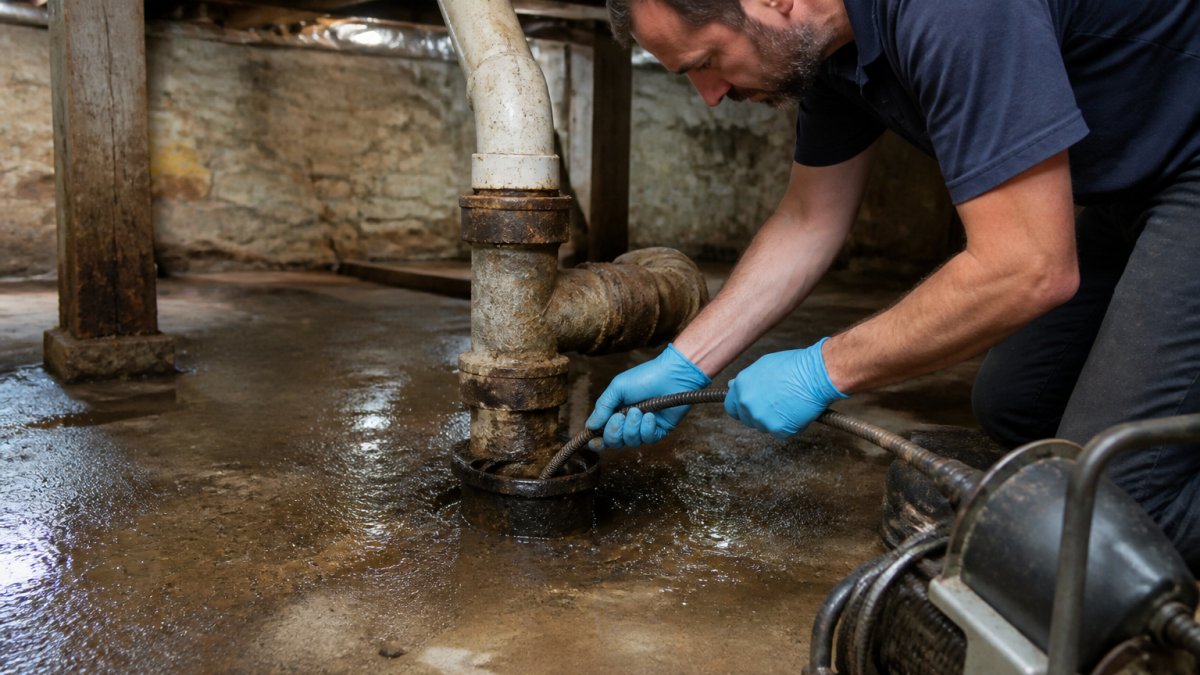
- Step 4: Clear the Clogged Drain or Sewer Line Causing the Smell
- Step 5: When Hydro Jetting for Sewer Lines Beats a Drain Snake
- Step 6: Deodorize, Sanitize, and Confirm the Sewer Backup Smell Is Gone
- Step 7: Prevent Sewer Backup Smell From Coming Back
- Frequently Asked Questions
Last Updated: September 11, 2026
Step 1: Find Out If You Have a Sewer Gas Smell in the House With No Backup
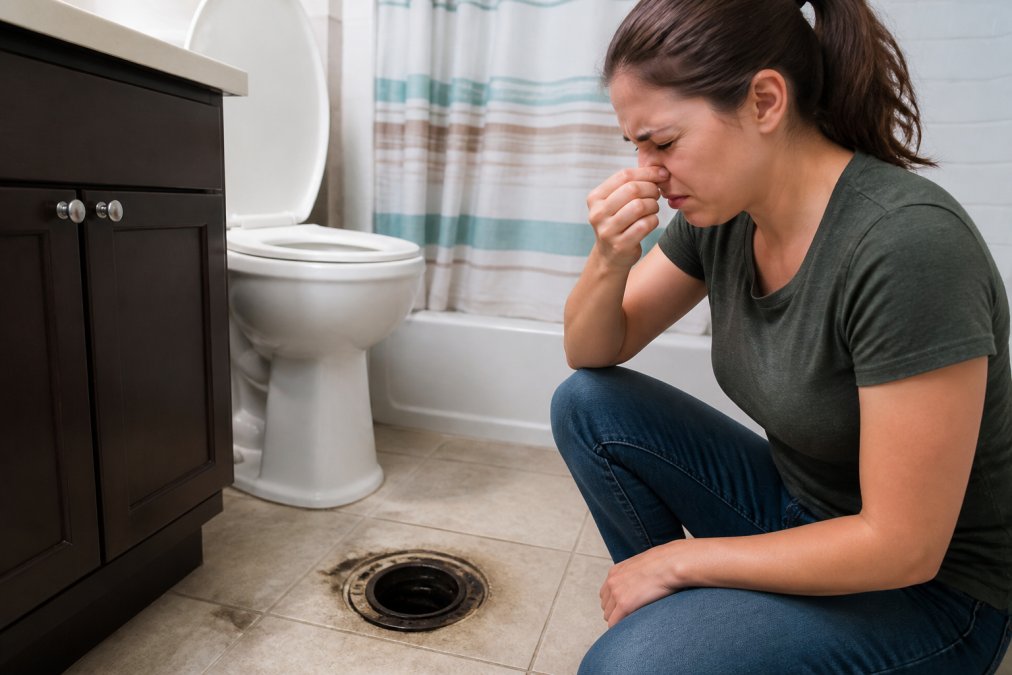
A sewer gas smell in the house with no backup usually means the problem is a dry trap or a blocked vent, not a flooded basement. That distinction matters, because it changes what you fix first.
Sewer gas smell is the odor of hydrogen sulfide and other gases produced by decomposing waste in a drain pipe or sewer line. When wastewater flows normally but you still smell it, the seal that keeps those gases out of your living space has failed somewhere.
The CDC guidance on hydrogen sulfide exposure notes that even low concentrations cause eye and throat irritation, so treat the smell as a real problem, not a nuisance.
Here's how to tell the two scenarios apart:
- Smell only, fixtures drain fine: suspect a dry trap, a blocked vent stack, or a failing wax ring.
- Smell plus slow drains or gurgling: suspect a partial clog in the drain pipe or sewer line.
- Smell plus multiple fixtures backing up: suspect a main sewer line clog. Stop here and call a professional.
Step 2: Check for the Signs of a Main Sewer Line Clog
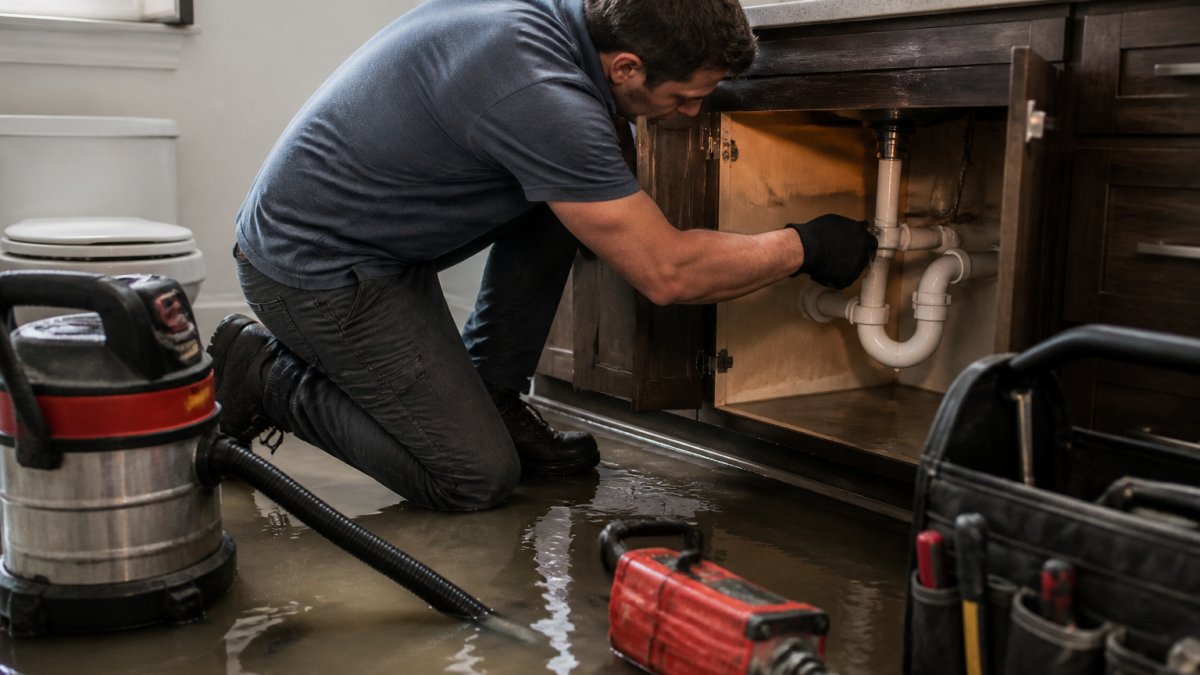
The signs of a main sewer line clog are unmistakable once you know the pattern: multiple fixtures draining slowly at the same time, gurgling sounds from toilets and tubs, and water backing up in the lowest drain in the house.
A single slow sink is a local clog. A whole-house slowdown is a sewer line problem. Test it by running the washing machine and watching the basement floor drain; if water rises there, the main line is restricted.
Watch for these signals specifically:
- Gurgling from a toilet after you run the sink or shower
- Water pooling around a floor drain during laundry cycles
- Toilets that need two flushes to clear
- A sewer smell that intensifies after any water use
If you're on a septic system rather than municipal sewer, add a failing drain field to the suspect list. Septic systems back up differently, and a septic backup often shows up first as odor in the yard near the tank, not inside the house.
Step 3: Restore the Water Seal in Every P-Trap and Floor Drain
The fix for most sewer gas smells with no backup is refilling the water seal in the p-trap and floor drain. A p-trap holds a small amount of water that blocks sewer gas from entering the home; when that water evaporates, gas flows straight through.
Floor drains in utility rooms, basements, and garages are the usual culprits. They sit unused for months, the water seal evaporates, and the dry trap becomes an open pipe to the sewer.
Pour one to two gallons of water slowly down every floor drain in the house. If the smell disappears, you found it. If it returns within a week, the trap is siphoning or the vent is blocked, and you need a plumber to look at the plumbing vent system.
Check these locations:
- Basement and utility room floor drains
- Laundry room standpipe
- Guest bathrooms and half baths that go unused
- Condensate drains from HVAC units tied into the drain pipe
For a floor drain you rarely use, a few tablespoons of mineral oil floated on top of the water slows evaporation significantly. Recheck it every few months.
Step 4: Clear the Clogged Drain or Sewer Line Causing the Smell
Clearing the clogged drain starts with the nearest fixture and works outward, but the tool you reach for should match the clog, not the other way around. Matching the right tool to the clog type is often key to a lasting fix.
The homeowner toolbox for this job:
- Cup plunger, for sinks, tubs, and toilets with a soft, close clog. Seal the overflow opening with a wet rag first or you'll just push air.
- Drain snake (hand auger), 1/4-inch cable, for hair and soap scum in a branch line within 25 feet of the fixture.
- Drum auger or drill-powered snake, 3/8- to 1/2-inch cable, for clogs past the trap arm or in a short horizontal run.
- Enzyme drain cleaner, for organic film and odor maintenance, not for hard blockages.
- Bucket, gloves, and eye protection, sewage splash is a real exposure risk, not a formality.
Work in this order:
- Remove the drain cover and pull out visible hair and debris with a hair catcher or gloved hand.
- Run a drain snake down the drain pipe to break up the clog. Feed it slowly; cranking fast kinks the cable and can scratch a PVC pipe wall.
- Flush with hot water, not boiling, to move the loosened debris through. Boiling water can soften wax rings and stress older pipe joints.
- If the drain still runs slow, the clog is deeper in the sewer line.
For organic buildup, an enzyme cleaner poured down the drain overnight digests the film that traps odor. It won't clear a hard blockage, but it helps maintain a clean drain pipe between professional visits.
Diagnostic flowchart: which tool for which symptom
- One fixture slow, others fine → branch-line clog. Plunger, then hand auger.
- Two or more fixtures slow at the same time → main line restriction. Stop DIY; call for a video inspection.
- Gurgling after water use, no backup yet → vent stack or partial main clog. Check the vent first, then the main.
- Smell in the yard near the tank (septic homes) → drain field or tank issue, not a drain clog. Do not snake the line.
- Recurring clog every few months in the same line → grease, scale, or roots. Snaking only opens a channel; the pipe needs scouring or inspection.
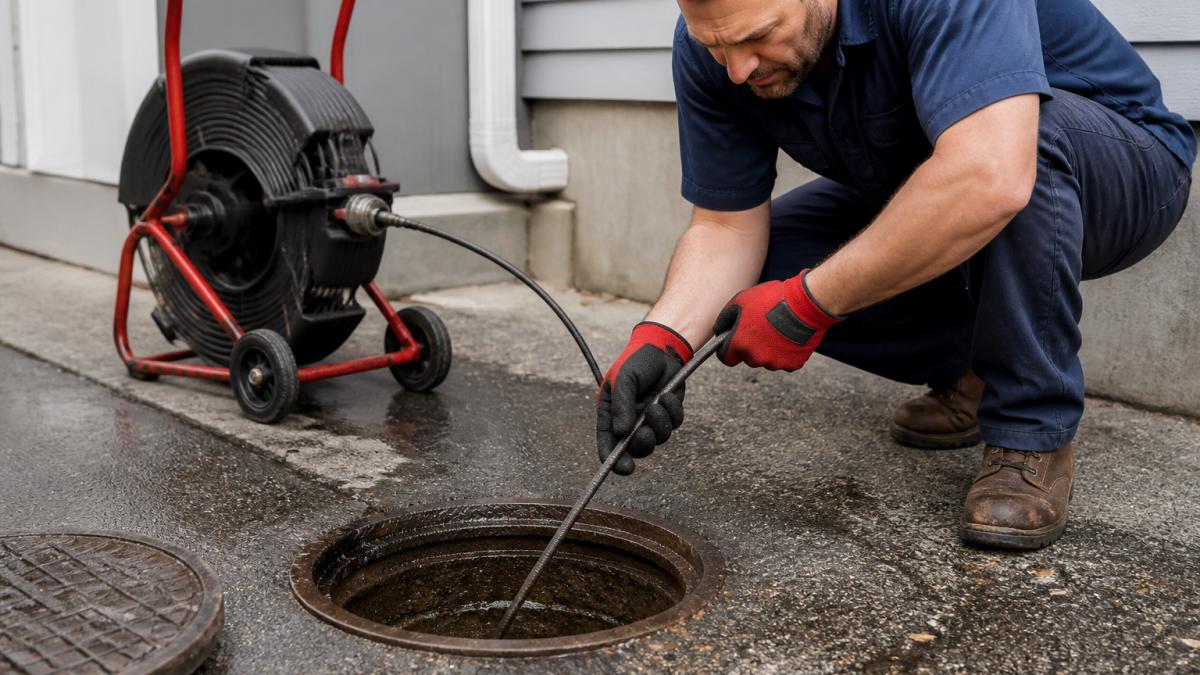
If multiple drains are slow or the sewer smell returns after every fix, the blockage is in the main sewer line. That's a job for a video inspection, not a hand snake. A camera run can help identify whether the problem is grease, scale, roots, or a collapsed pipe, which helps determine whether snaking, hydro jetting, or a repair is the right next step.
Step 5: When Hydro Jetting for Sewer Lines Beats a Drain Snake
Hydro jetting for sewer lines is the better choice when the clog is grease, scale, or roots, not a simple hair ball. A drain snake punches a hole through a clog; hydro jetting scours the pipe wall clean.
That difference is why the same clog keeps coming back. A snake opens a channel, and grease or root mass closes it again within months. High-pressure water, delivered through a rotating nozzle, strips the buildup off the pipe wall and flushes it away.
Choose hydro jetting when:
| Situation | Drain Snake | Hydro Jetting |
|---|---|---|
| Single hair clog in a sink or tub | Best choice | Overkill |
| Grease buildup in a kitchen line | Temporary fix | Correct fix |
| Tree roots in the sewer line | Cuts an opening | Clears the full pipe |
| Recurring clogs every few months | Repeats the problem | Addresses the cause |
| Old pipes, unknown condition | Lower risk | Needs video inspection first |
For older homes, hydro jetting is safe when the pipe condition is verified first. We run a video inspection before any high-pressure work to assess the sewer line's condition. This helps us determine the most effective solution for a lasting fix.
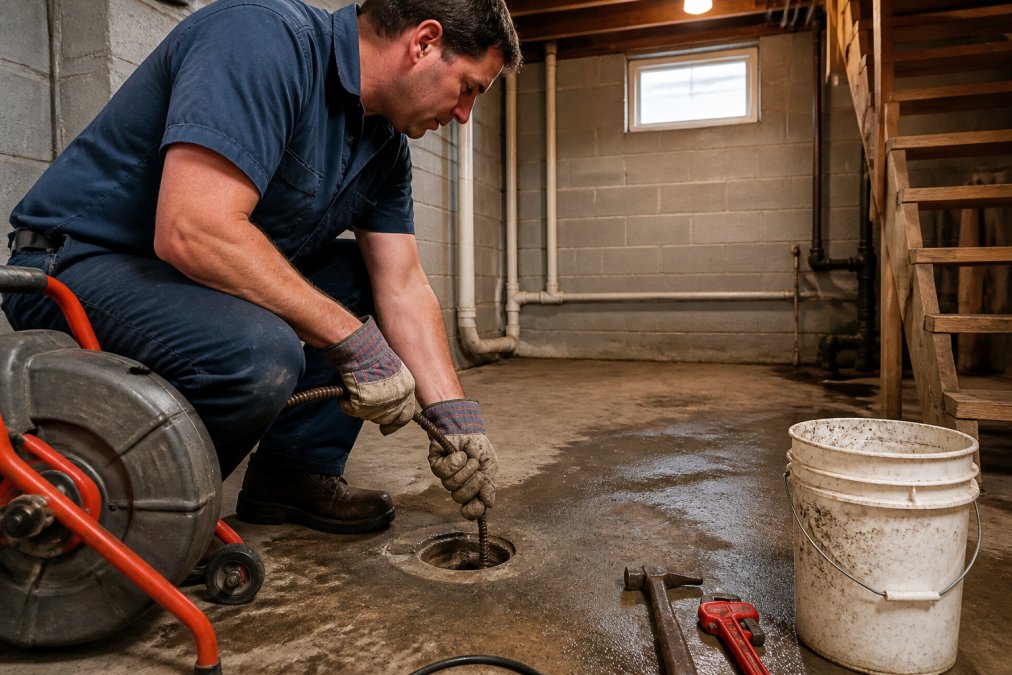
Step 6: Deodorize, Sanitize, and Confirm the Sewer Backup Smell Is Gone
Once the clog is cleared, the odor has to be removed from the surfaces it touched, and the reason to take this step seriously goes beyond smell. The rotten-egg odor is hydrogen sulfide, a gas produced by decomposing waste. At the low concentrations typical of a household drain, it causes eye, nose, and throat irritation and headaches; at higher concentrations in enclosed spaces it can cause more serious effects. The CDC notes that hydrogen sulfide is heavier than air, so it collects in basements, crawl spaces, and utility rooms rather than dispersing (the CDC). That's why ventilating the space while you work matters as much as the cleaning itself.
Deodorize vs. sanitize, they are not the same step.
- Deodorize removes or neutralizes the odor molecules. Baking soda and vinegar, or a commercial enzymatic deodorizer, do this.
- Sanitize reduces the bacteria and biofilm that keep producing the odor. This requires a disinfectant rated for drain use.
Skipping sanitization leaves the biofilm intact, and the smell returns within days.
Start with the drain itself. A baking soda and vinegar cleaning method works for light odor: pour half a cup of baking soda down the drain, follow with a cup of white vinegar, let it sit for 15 minutes, then flush with hot water. The reaction loosens organic film, but it does not disinfect.
For sanitization, follow with a plumbing-safe disinfectant rated for drain use. Avoid mixing bleach with other cleaners, and never pour bleach into a septic system in large amounts; it kills the bacteria the system depends on. In a septic home, use an enzyme-based or oxygen-based product instead, and keep the volume modest, the tank's bacterial balance is what breaks down waste between pump-outs.
Home-type differences that change this step:
- Municipal sewer: standard drain disinfectants are fine. If the smell returns after sanitizing, the source is likely the vent stack or a dry trap, not the drain surface.
- Septic system: avoid chlorine bleach and antibacterial cleaners in volume. Odor that persists after cleaning often points to a full tank, a failing drain field, or a dry trap in an unused fixture, not a dirty drain.
Then confirm the fix:
- Run every fixture for a minute and smell near each drain.
- Check the floor drain after a laundry cycle.
- Wait 24 hours and recheck. If the smell returns, the trap is drying out or the vent is still blocked.
Step 7: Prevent Sewer Backup Smell From Coming Back
Prevention comes down to keeping water in the traps, keeping the line clear, and catching problems before they become backups. A short maintenance routine handles all three.
- Pour water down every floor drain once a month.
- Install hair catchers in showers and tubs, and clean them weekly.
- Run an enzyme cleaner down kitchen and bathroom drains monthly.
- Never pour grease down a drain; wipe pans into the trash first.
- Schedule a plumbing inspection every 12 to 18 months, especially in homes with mature trees near the sewer line.
For septic system owners, add a tank pump-out on the schedule your provider recommends and watch for soggy ground near the drain field.
A professional video inspection every year or two catches root intrusion and scale buildup before they turn into a sewage backup. It's the cheapest insurance against the problem you're trying to avoid.
EPA guidance on septic system maintenance
Sewer smells rarely fix themselves, and the cause is often deeper than the drain you can see. Jersey Shore Sewer & Drain Cleaning has handled residential, commercial, and industrial sewer and drain work since 1990, and we use advanced technology like video inspections and high-pressure hydro jetting to resolve issues efficiently. Our team is licensed, bonded, and insured, with same-day appointments and 24/7 emergency service available. Get a free quote. Call the plumber now.
Frequently Asked Questions
How can I get rid of a sewer smell from my drain?
Start by pouring a gallon of water down every floor drain and sink you rarely use. That refills the P-trap water seal that blocks sewer gas. If the smell stays, clear the clogged drain with a drain snake, then clean the drain cover and pipe walls with an enzyme cleaner. Persistent sewer backup smell after those steps usually means a blocked vent stack or a break in the sewer line, which needs a plumbing inspection.
I have a sewer smell in my house, but there's no backup water. What could be causing this?
A sewer gas smell in the house with no backup is almost always a dry trap, a blocked plumbing vent, or a loose toilet wax ring. Floor drains in basements and laundry rooms lose their water seal within a few weeks in dry conditions. A clogged vent stack traps gas that then pushes back through the lowest fixture. Neither problem floods the floor, so the smell shows up alone.
Is it dangerous to breathe in sewer gas in my home?
Hydrogen sulfide is the gas behind the rotten egg smell, and it is toxic at high concentrations. Low levels cause headaches, nausea, and eye irritation. At higher levels it can cause dizziness and loss of consciousness. If the odor is strong, if you feel sick, or if multiple people in the home notice symptoms, leave the building and call a licensed plumber. Do not run fans that could spread gas into living areas.
Can a dry P-trap cause a sewer smell?
Yes. The P-trap holds a water seal that blocks sewer gas from entering your home. When a fixture sits unused, that water evaporates, and the seal breaks. Floor drains, guest bathrooms, and basement sinks are the usual culprits. Pour a gallon of water down each one, then add a tablespoon of mineral oil to slow evaporation. If the trap is cracked or the vent is blocked, refilling alone will not hold.