 how-to
How to Handle a Plumbing Inspection for a Mortgage in 2026
Last Updated: November 1, 2026
Quick Summary
A plumbing inspection is not a standard mortgage requirement, and most lenders never ask for one. Lenders confirm property condition through an appraisal, not a plumbing inspection. A separate plumbing inspection is only requested when an appraisal flag, insurance question, or unresolved defect triggers it.
- A four-point inspection covers the roof, electrical, HVAC, and plumbing systems, and insurers often request one on older homes.
- FHA and VA loans carry stricter property standards than conventional loans, so plumbing defects can become required repairs.
- A general inspector cannot camera a buried sewer line, so ask for a dedicated sewer scope on older homes.
- Book any specialist inspection before your inspection contingency expires to keep negotiating room.
- Ask your loan officer in writing whether the program requires any inspection beyond the appraisal.
Table of Contents
- Is a Plumbing Inspection Required for a Mortgage?
- How a Home Inspection Differs From an Appraisal
- Plumbing Problems That Affect Mortgage Approval
- Your Home Inspection Plumbing Checklist
- Plumbing Inspection Cost and What Drives It
- Who Pays for Plumbing Repairs After Inspection
- How to Confirm Requirements Before Closing
- Booking a Sewer and Plumbing Inspection Before You Close
- Frequently Asked Questions
Is a Plumbing Inspection Required for a Mortgage?
Short answer: no. A plumbing inspection is not a standard mortgage requirement, and most lenders never ask for one. The home inspection itself is usually optional for buyers, though AmeriSave's 2026 home inspector guide notes that roughly 80% of buyers still order one, a figure that climbs when a lender requires it.
Here's the part most buyers miss. Lenders care about one thing: whether the property supports the loan. They confirm that through an appraisal, not a plumbing inspection. A separate plumbing inspection enters the picture only when a specific concern surfaces, like an appraisal flag, an insurance question, or a defect the general inspector can't resolve.
Below, we'll walk through when a plumbing inspection gets requested, who pays for it, and what to do if it finds a problem.
When a Lender or Insurer Actually Requests One
A lender can require further inspection when the appraisal or a property condition raises a red flag. That's the trigger, and it's narrower than most buyers assume.
Common triggers include:
- An appraiser notes visible water damage or an active leak
- The property has a well, septic system, or unusual plumbing setup
- An insurer flags the home as uninsurable without a closer look
- A government-backed loan requires specific property condition standards
Insurance is the quieter driver. A four-point inspection covers the roof, electrical, HVAC, and plumbing systems. Insurers often request one on older homes before issuing a policy, and a failing plumbing section can stall coverage even when the mortgage itself is fine.
The takeaway: the mortgage lender rarely demands a plumbing inspection outright. The appraisal, the insurer, or the loan program does the demanding.
How a Home Inspection Differs From an Appraisal
These two get confused constantly, and the confusion costs buyers money. A home inspection is a hands-on review of the property's essential systems. An appraisal is a valuation. They answer different questions.
| Feature | Home Inspection | Appraisal |
|---|---|---|
| Purpose | Find defects and safety issues | Estimate property value |
| Who orders it | Usually the buyer | The mortgage lender |
| Required? | Often optional | Nearly always required |
| Focus | Roof, electrical, plumbing, HVAC | Market value and condition |
| Output | Inspection report | Appraisal report |
Lower's loan-type guidance draws the line clearly: an appraisal is not a full inspection. A general inspector tests plumbing where it can be operated safely, per Opendoor's 2026 inspection overview. Neither replaces a specialist who cameras the sewer line.
That gap matters. A general inspection tells you the toilet flushes. A plumbing inspection tells you why the drain is slow and what it will cost to fix.
Plumbing Problems That Affect Mortgage Approval
Plumbing defects rarely sink a mortgage on their own. They sink it when they become required repairs tied to loan conditions or insurability.
The issues that show up most:
- Active leaks or water damage visible to an appraiser
- A failed septic system or well
- Galvanized or polybutylene supply lines in poor condition
- Sewer line blockages or collapsed pipe
- Missing or broken shutoff valves
Underwriting looks at property condition through the loan program's lens. FHA and VA loans carry stricter property standards than conventional loans, so a plumbing defect that slides on a conventional loan can become a repair requirement on a government-backed one.
Sellers should price these in early. Our guide on what plumbing repairs really cost sellers in 2026 breaks down the real numbers behind the defects that block approval.
Your Home Inspection Plumbing Checklist
Use this checklist to know what a general inspector checks and what needs a specialist. It's the difference between a clean report and a surprise at closing.
- Water pressure at multiple fixtures
- Visible supply lines and shutoff valves
- Drain speed in sinks, tubs, and showers
- Toilet stability and flush performance
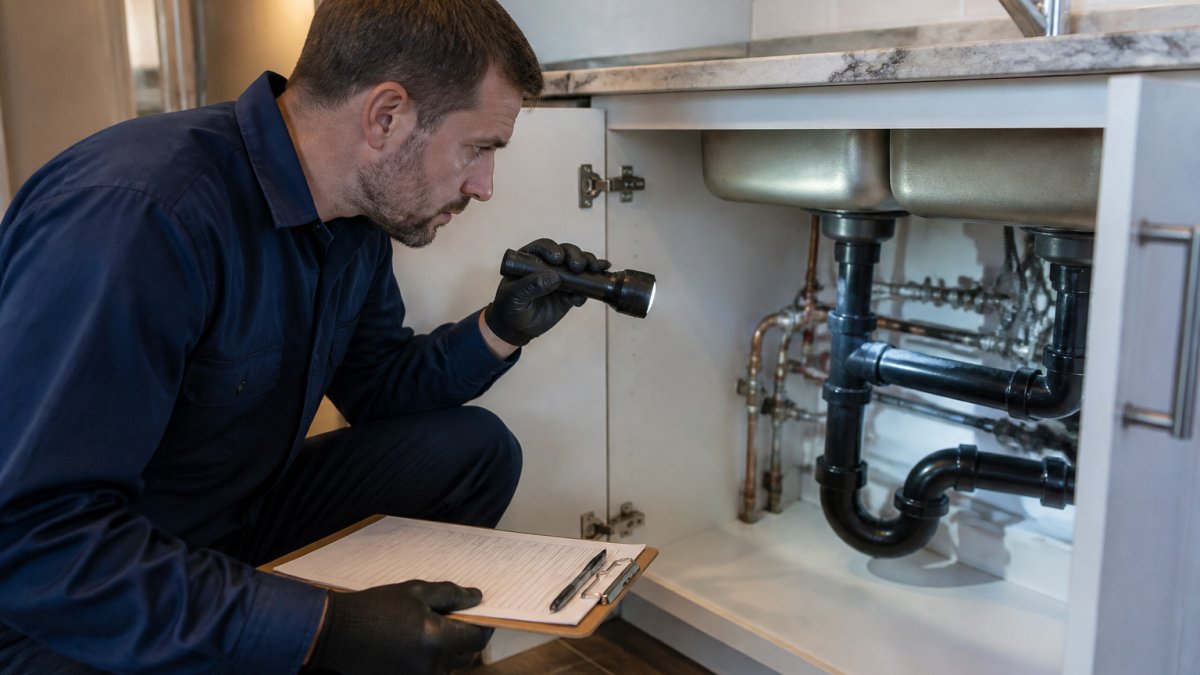
- Under-sink cabinets for leaks or staining
- Water heater age, condition, and relief valve
- Signs of water damage on ceilings and floors
- Sewer line condition, if accessible
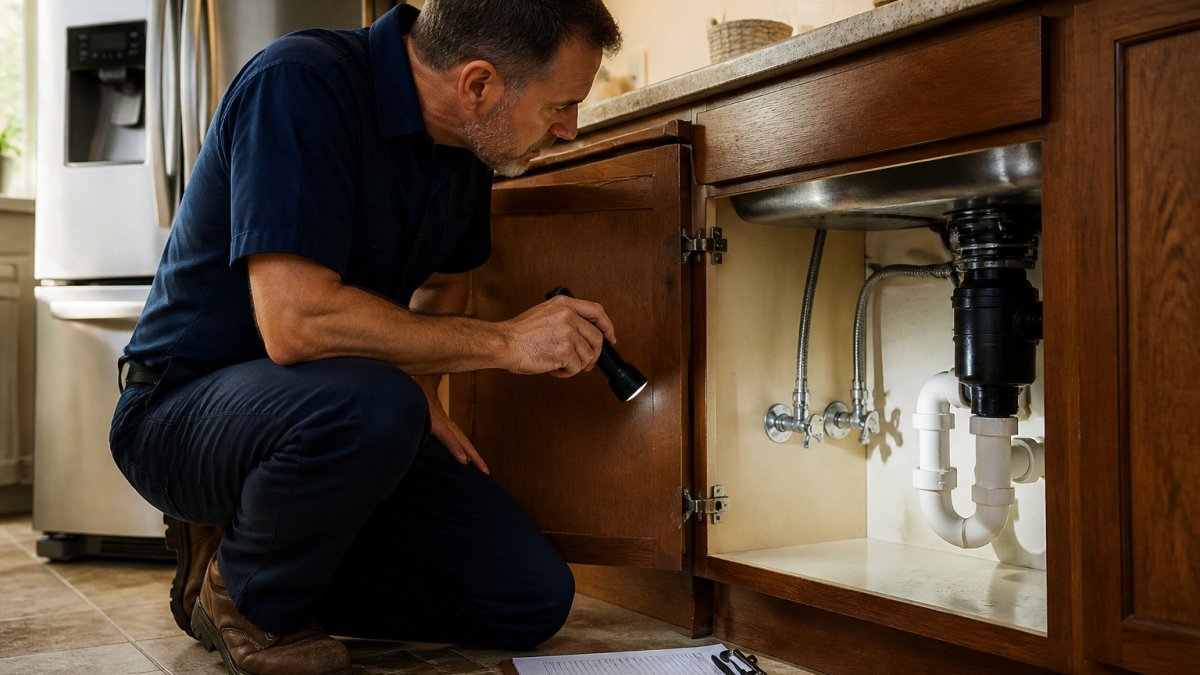
What most guides miss is the sewer line. A general inspector can't camera a buried line, and that's where the expensive surprises hide. If the home is older or has mature trees nearby, ask for a dedicated sewer scope.
Plumbing Inspection Cost and What Drives It
Pricing depends on scope, access, and property type, so the most reliable way to get a figure is a written quote for your specific property. Here's what moves the number and how the process works.
Typical cost factors:
- Visual inspection only: A plumber inspects accessible supply lines, shutoff valves, fixtures, water heater, and visible drain connections. This is typically the lower-scope option and may be sufficient for a basic condition check, depending on what the lender or insurer requires.
- Camera scope (sewer line): A camera is fed through the main sewer line to inspect for roots, cracks, bellies, and blockages. This part of the inspection is the one most likely to find problems that affect closing. Ask for the scope to be quoted separately so you can see its cost.
- Sewer line length and access: A long line, a difficult cleanout location, or a line that requires pulling a toilet to access adds labor and time.
- Property age and pipe material: Older homes with cast iron, galvanized steel, or clay tile lines take longer to inspect and are more likely to need a scope.
- Number of fixtures and systems: A single-family home with two bathrooms is a different job than a multi-unit property with shared lines.
- Emergency or same-day scheduling: Timing requests may affect the quote.
What a plumbing inspection includes:
A specialist inspection typically covers water pressure at multiple fixtures, visible supply lines and shutoff valves, drain speed, toilet stability and flush performance, under-sink cabinets for leaks or staining, water heater age and relief valve condition, signs of water damage, and, when a scope is added, the interior condition of the main sewer line.
Scheduling and access:
Book the inspection before your inspection contingency expires. The plumber will need access to the main water shutoff, the water heater, all bathrooms and the kitchen, and the sewer cleanout. If the cleanout is buried or inaccessible, the scope may require additional work. Ask the seller or listing agent to clear access in advance.
For a closer look at what a camera scope runs, see our breakdown of sewer camera inspection cost. It covers the 2026 pricing picture so you can budget before you book.
Who Pays for Plumbing Repairs After Inspection
Who pays for inspections and repairs is typically settled in the purchase contract.
In practice:
- Seller pays when the defect is a loan condition or a safety issue
- Buyer pays when they want upgrades beyond what the lender requires
- Split when both sides want the deal to close and the number is large
A plumbing defect found during inspection becomes use. The seller can fix it, credit the buyer, or walk. The buyer can request a repair, ask for a credit, or renegotiate price.
If you're facing a repair demand, our guide on how to negotiate plumbing repairs after inspection walks through the ask, the credit, and the walk-away point.
How to Confirm Requirements Before Closing
Confirm requirements in writing, early, and with the right person. Don't rely on what a friend's lender did last year.
- Ask your loan officer whether the program requires any inspection beyond the appraisal.
- Get the answer in writing, including any property condition standards.
- Ask your insurer whether a four-point inspection is needed for coverage.
- Check the appraisal for any condition notes that trigger further review.
- Schedule any specialist inspection before your inspection contingency expires.
For a deeper dive on the sewer side, our guide on sewer inspection requirements for home buyers covers what lenders and insurers typically look for.
The timing matters as much as the requirement. An inspection completed after your contingency window closes gives you no negotiating room.
Booking a Sewer and Plumbing Inspection Before You Close
Book the inspection early, scope the sewer line, and get a written report you can hand to your lender or insurer. That's the whole playbook.
A camera inspection shows the inside of the pipe, not just the drain speed, which can reveal roots, cracks, and bellies before they become repair issues. Our overview of video pipe inspection benefits explains why it finds problems fast and what the footage proves.
Jersey Shore Sewer & Drain Cleaning is licensed, bonded, and insured, and offers same-day appointments, 24/7 emergency services, and free quotes.
Get started with Jersey Shore Sewer & Drain Cleaning and close with a clear picture of your plumbing. Call the plumber now.
Frequently Asked Questions
Is a plumbing inspection required to get a mortgage?
In most cases, no. A routine plumbing inspection is not a standard mortgage requirement, and a general home inspection is usually optional for the buyer. Lenders require an appraisal on nearly all mortgages, but an appraisal is not a full inspection. A plumbing inspection becomes necessary when an appraisal flags a property condition concern, when a specific loan program imposes property standards, or when an insurer wants proof of condition before issuing coverage. Confirm with your loan officer early, because requirements vary by lender and loan type.
Can a mortgage lender require plumbing repairs before closing?
Yes, a lender can make repairs a condition of loan approval. Underwriting may require certain property conditions to be corrected before closing, particularly where a defect affects safety, water supply, or the property's value and insurability. The lender typically states this in writing as a loan condition, and the work usually must be completed and documented before funds are released. Ask your loan officer to put any repair requirement in writing so you know exactly what is expected and by when.
How much does a plumbing inspection cost?
Plumbing inspection cost depends on the scope, the property size, and whether the inspector runs a camera through the sewer line. A limited visual check of fixtures and visible piping costs less than a full sewer scope with video documentation. Pricing also varies by access: a basement cleanout is quicker to work with than a line reached through a roof vent. Request a written quote that states what is included, since a cheap inspection that skips the sewer line tells you little about the buried pipe you actually care about.
Who pays for plumbing repairs after a home inspection?
It depends on what the purchase contract says. In many transactions, the seller agrees to fix certain defects or credits the buyer at closing, but neither is automatic. The inspection report is a negotiating tool, not an order to repair. If a lender requires the repair as a loan condition, someone must complete it before closing, and the contract usually determines who. Get any agreement in writing, with the scope of work and a deadline, and keep receipts and photos for the lender and title company.