 how-to
How to Prevent Kitchen Grease Clogs
Table of Contents
- What Are Fats, Oils, and Grease (FOG)?
- Why Grease Causes Drain Clogs
- The Cool It, Can It, Trash It Method
- Proper Disposal of Cooking Oil
- Signs of Grease Buildup in Kitchen Sink
- Hydro Jetting for Kitchen Grease Removal
- Long-Term Maintenance to Prevent Grease Clogs
- Frequently Asked Questions
Last Updated: September 23, 2026
What Are Fats, Oils, and Grease (FOG)?
Fats, oils, and grease (FOG) are byproducts of cooking that solidify and accumulate inside drain pipes. When you pour hot cooking oil down the sink, it flows easily at first. But as it cools, the viscosity increases and it hardens into a stubborn, waxy substance that clings to pipe walls.
FOG includes butter, lard, meat drippings, cooking oil, salad dressings, and dairy products. These materials don't dissolve in water; they build up over time, trapping food particles and debris until water flow is completely restricted.
Understanding FOG is the foundation of how to prevent kitchen grease clogs. The problem is cumulative buildup that hardens and restricts your plumbing system over time.
Why Grease Causes Drain Clogs
Grease causes clogs because it solidifies as it cools inside pipes, sticking to interior walls and trapping hair, soap scum, and food particles into a dense blockage.
In municipal sewer lines, grease from multiple homes combines to form massive clogs affecting entire neighborhoods.
Kitchen sink drains are typically 1.5 inches in diameter. Even a thin grease layer reduces flow significantly; add soap, hair, and food waste and the pipe closes completely.
Temperature is crucial: hot grease flows easily, but cools and solidifies quickly in underground or in-wall pipes.
The Cool It, Can It, Trash It Method
The "Cool It, Can It, Trash It" method prevents kitchen grease clogs in three steps: (1) Cool grease 15-30 minutes until solid, (2) transfer to a sealed container, (3) throw in trash. This keeps grease out of drains entirely.
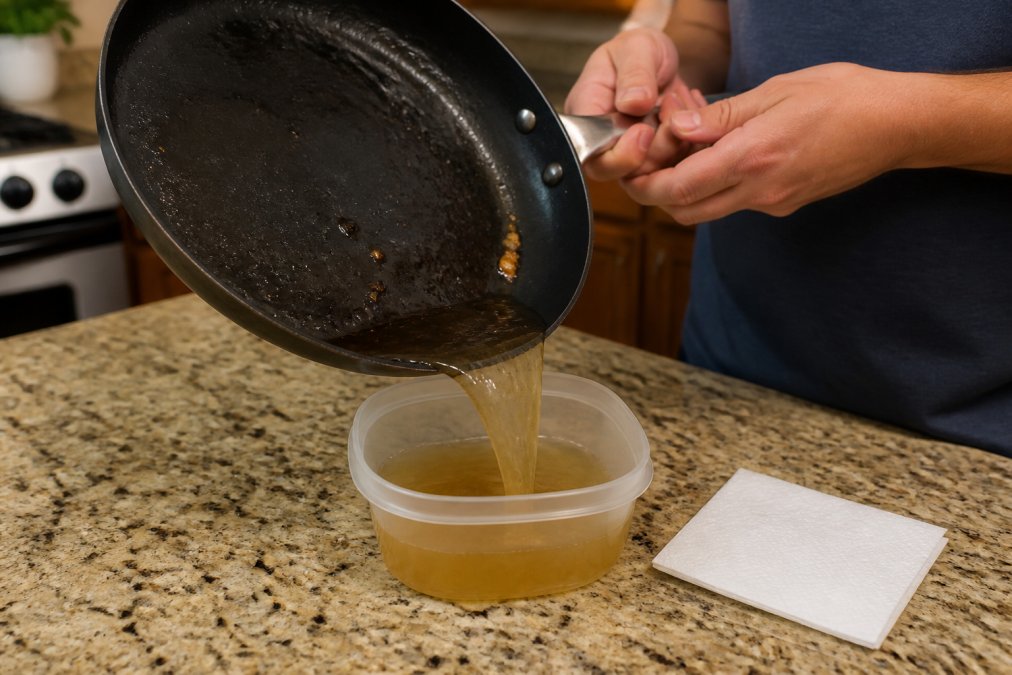
This method works for all grease types. The key is cooling it first.
Proper Disposal of Cooking Oil
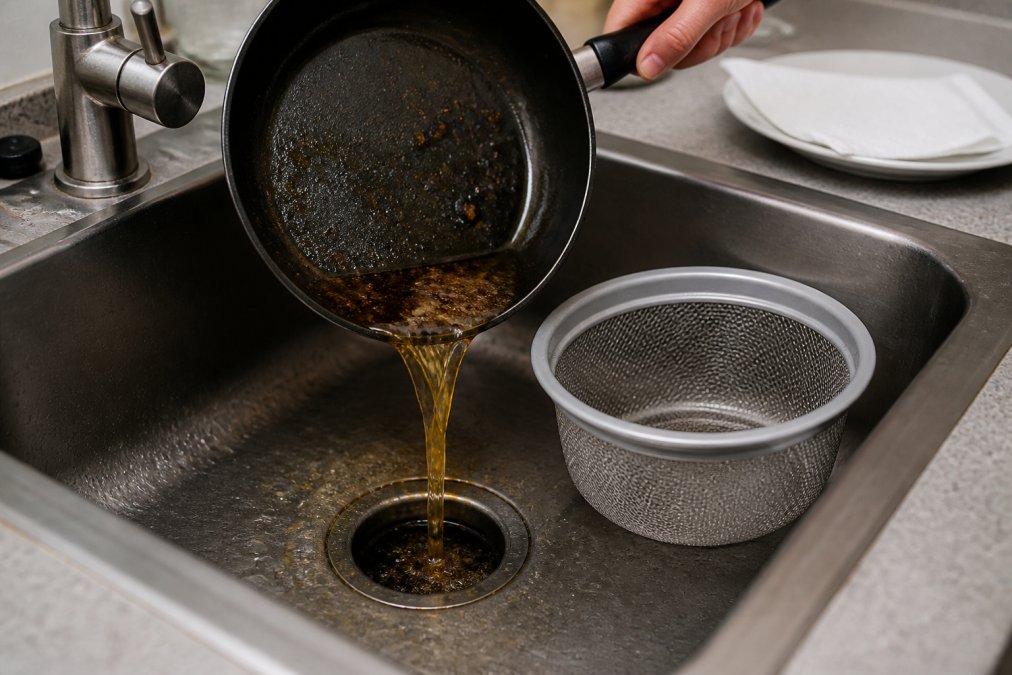
Cooking oil is the most common cause of kitchen drain clogs. Never pour it down the drain, even with boiling water, the oil solidifies as pipes cool, causing buildup regardless.
Oil Disposal Differs by Drain Type
Standard sink drains (no garbage disposal): Most vulnerable to grease clogs because oil flows directly into narrow pipes. Even small amounts accumulate rapidly and should never be poured down these drains.
Garbage disposal drains: Disposals cannot break down oil, it coats blades and pipes, solidifying downstream. Disposals actually worsen grease clogs because people mistakenly assume grinding solves the problem.
Best practices for cooking oil disposal:
- Cool oil completely, then pour into a sealed container
- Place in trash bin
- For large quantities, check if your local waste facility accepts used oil for recycling
Environmental Impact of Improper Oil Disposal
In municipal sewer systems, oil combines with grease from hundreds of homes to form "fatbergs", massive blockages requiring weeks of specialized equipment to remove (The Fatberg Problem Grease Traps May Do More Harm Than Good). Major cities spend significant resources annually on fatberg removal.
Oil reaching waterways harms aquatic ecosystems by creating films that prevent oxygen exchange and suffocate aquatic life (the EPA). Proper disposal prevents these consequences.
Cooking Oil Recycling Programs
Many communities have used cooking oil collection programs that convert oil to biodiesel. Call your local waste management department to ask if this option exists in your area. Small amounts of oil on dishes are acceptable to rinse with hot water and dish soap, but this should be the exception, not the rule, as regular use still causes buildup.
Signs of Grease Buildup in Kitchen Sink
Recognizing early warning signs of grease buildup helps prevent complete clogs and determines whether DIY maintenance or professional intervention is needed. Early detection is far less expensive than emergency repairs.
Early-Stage Grease Buildup (Preventive Action Needed)
These signs indicate grease is beginning to accumulate but hasn't yet restricted water flow significantly. At this stage, DIY maintenance can reverse the problem.
Slightly slower drainage: Water drains slower than normal but completely within 10-15 seconds, the earliest warning sign that grease is coating pipe walls.
No visible blockage: No standing water, backup, or gurgling sounds, but the problem is present.
Occasional faint odors: A subtle smell from the drain indicates decomposing food trapped in early-stage buildup.
Action: Monthly baking soda and vinegar cleaning, increased hot water flushing, and strict Cool It, Can It, Trash It method prevent progression.
Mid-Stage Grease Accumulation (Professional Cleaning Recommended)
These signs indicate significant grease buildup that DIY methods are unlikely to resolve. Professional drain cleaning is cost-effective at this stage.
Noticeably slow drainage: Water takes 20+ seconds to drain, indicating grease has reduced pipe diameter by 30-50%.
Gurgling sounds: Gurgling or bubbling indicates air trapped behind grease buildup.
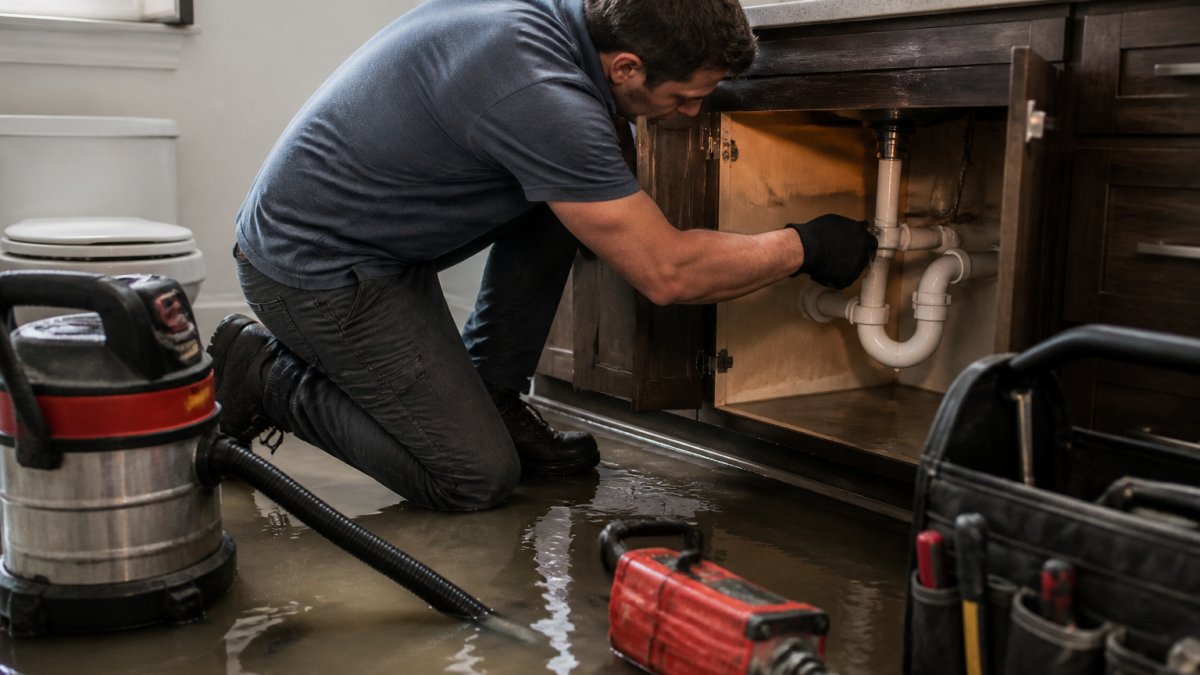
Visible grease residue under sink: A greasy film on P-trap or pipes indicates heavy accumulation inside.
Recurring slow drainage: Problem returns within days or weeks after cleaning, indicating grease is the root cause.
Persistent odors: Regular drain smell indicates significant decomposing material trapped in grease.
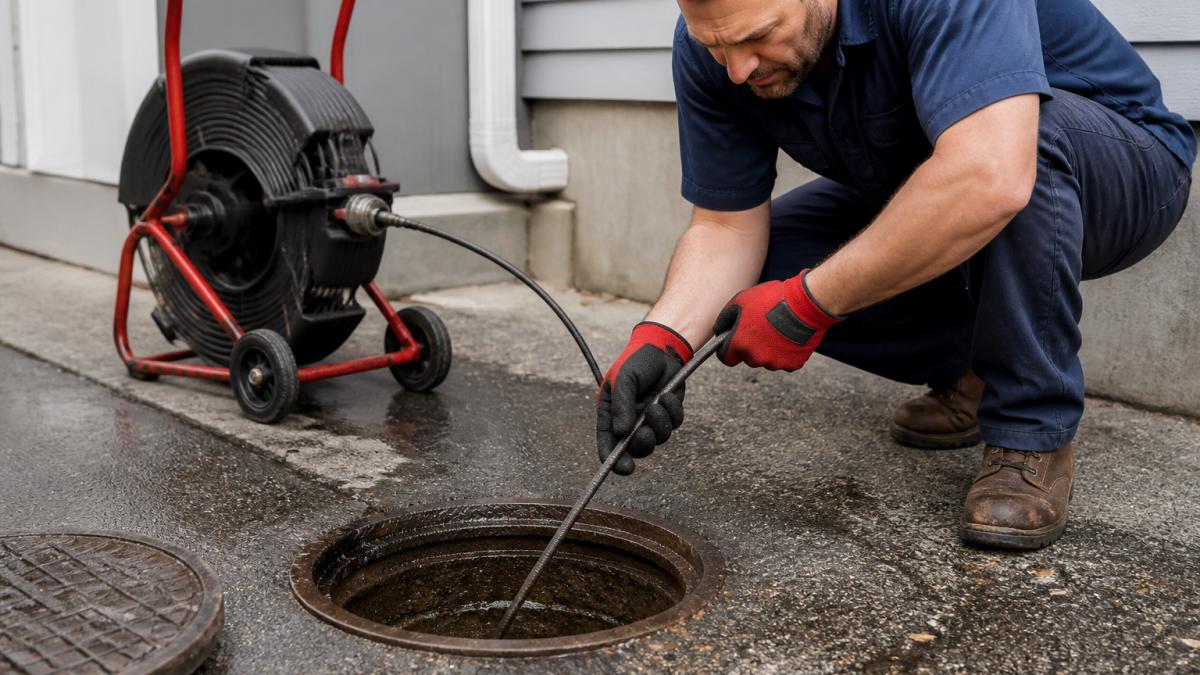
Action: Contact a professional drain cleaning service. Hydro jetting or snake cleaning removes accumulated grease before complete blockage occurs.
Late-Stage Grease Clog (Emergency Intervention Required)
These signs indicate a near-complete or complete blockage. Immediate professional intervention is necessary to restore drainage.
Visual Troubleshooting Checklist
Use this checklist to assess your drain's condition:
- Water drains at normal speed (no pooling or delay) = No action needed
- Water drains slowly but completely within 10-15 seconds = Early stage: DIY maintenance
- Water takes 20+ seconds to drain, or gurgling sounds present = Mid-stage: Schedule professional cleaning
- Water doesn't drain or backs up into sink = Late stage: Call plumber immediately
- Multiple drains affected or sewage smell present = Emergency: Call plumber today
Hydro Jetting for Kitchen Grease Removal
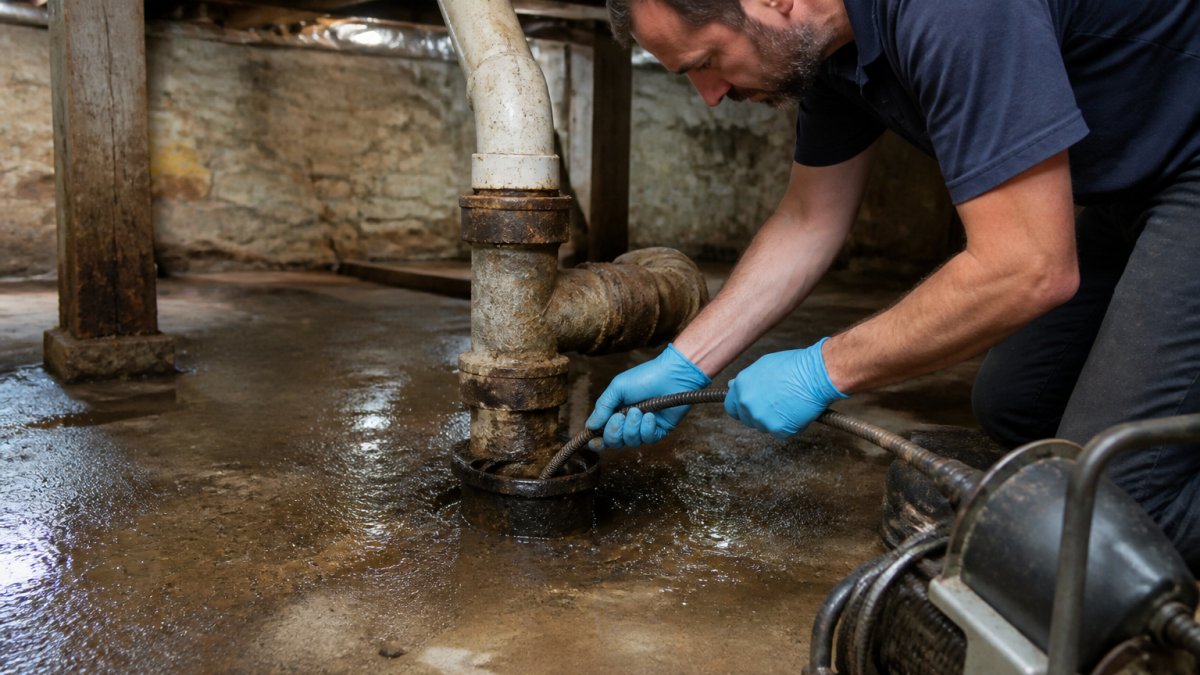
When grease buildup becomes severe, standard drain cleaning methods often fall short. Hydro jetting is a powerful solution that blasts away stubborn grease accumulation and restores full pipe capacity.
Hydro jetting is particularly effective for:
- Chronic grease clogs that return repeatedly
- Buildup affecting the main drain line
- Commercial kitchen drains with heavy grease loads
- Older pipes with decades of grease accumulation
- Preventing future clogs by cleaning pipes completely
Long-Term Maintenance to Prevent Grease Clogs
To prevent kitchen grease clogs requires consistent habits and regular maintenance. One-time prevention efforts aren't enough. You need an ongoing strategy that keeps grease out of your plumbing system.
Daily prevention habits:
- Use the Cool It, Can It, Trash It method for all cooking grease
- Wipe pans and dishes with paper towels before washing
- Scrape food waste into the trash, not down the drain
- Use a drain strainer to catch food particles
- Run hot water after each use to flush the drain
- Never pour grease down the garbage disposal
Weekly maintenance:
- Pour boiling water down the kitchen sink drain to flush residue
- Clean drain strainers and remove trapped debris
- Inspect under-sink pipes for leaks or grease residue
Monthly deep cleaning:
- Mix baking soda and vinegar, pour down the drain, and let it sit for 30 minutes before flushing with hot water
- This chemical-free method helps dissolve minor grease buildup without harsh chemicals
Quarterly professional inspection:
- Schedule a professional drain inspection to catch problems early
- Video inspection technology allows technicians to see inside pipes and identify grease accumulation before it becomes a clog
Frequently Asked Questions
How can I prevent grease clogs in my kitchen sink?
The most effective method is the Cool It, Can It, Trash It approach: let grease cool and solidify, pour it into a sealable container, and dispose of it in the trash. Never pour hot grease down the drain. Scrape food residue from dishes before washing, use a drain strainer to catch particles, and flush your pipes monthly with hot water.
What are the signs of grease buildup in my kitchen sink?
Early warning signs include slow drainage, unpleasant odors coming from the drain opening, and visible residue around the drain. As buildup worsens, you may notice water pooling in the sink, gurgling sounds when draining, or complete blockages. Grease buildup reduces the viscosity of liquid waste flow and creates solid deposits that accumulate over time. If you notice these signs, address them immediately to prevent a full pipe blockage that requires professional drainage service.
Is hot water enough to prevent grease clogs?
Hot water alone is not sufficient for long-term clog prevention. While boiling water can temporarily help move grease through pipes, it will eventually cool and solidify further down the drain or sewer lines, causing buildup. Hot water works best as part of a routine maintenance plan, flush your drain weekly with boiling water after properly disposing of grease. For existing buildup or stubborn clogs, professional hydro jetting uses high-pressure water to remove accumulated grease and residue that hot water cannot address.
What should I never pour down the drain?
Never pour cooking oil, shortening, bacon grease, butter, or any liquid fat down the drain. Avoid pouring meat drippings, dairy products, sauces with oil, and food scraps. These items solidify or emulsify in pipes, creating blockages in your plumbing system and sewer lines. Use paper towels to wipe out pans before washing, and dispose of all FOG in a sealable container in the trash. Even small amounts of grease accumulate over time and cause costly clogs.